Modern industrial environments are filled with data. Production systems generate detailed metrics. Sensors monitor temperature, pressure and vibration. Control rooms display performance indicators in real time.
Yet there remains one variable that rarely appears in operational dashboards: human attention.
When procedures are not enough
Industrial processes are designed to minimise variability. Procedures are carefully documented and training programmes aim to ensure consistent execution.
Despite these safeguards, errors still occur:
- A maintenance signal may be overlooked
- A defect may pass inspection
- An operator may focus on one part of a system while another requires attention
Psychologists refer to this phenomenon as “inattentional blindness”, to describe the tendency to overlook visible information when attention is directed elsewhere. In operational environments, this gap between available information and human attention becomes a critical factor in performance and safety.
The Blind Spot in Industrial Analytics
Industrial analytics typically answers questions such as:
- When did a machine anomaly occur?
- Which process parameter exceeded tolerance levels?
- How frequently do specific failures occur?
These insights are invaluable. But they often explain only part of the story.
In many situations, operational outcomes are influenced by human decisions made in real time.
- A technician interprets diagnostic signals
- An operator monitors system behaviour
- An inspector decides whether a product meets quality standards
These decisions depend heavily on attention and perception. Yet this dimension of operations has historically remained invisible in most analytics systems.
Understanding how Attention Flows
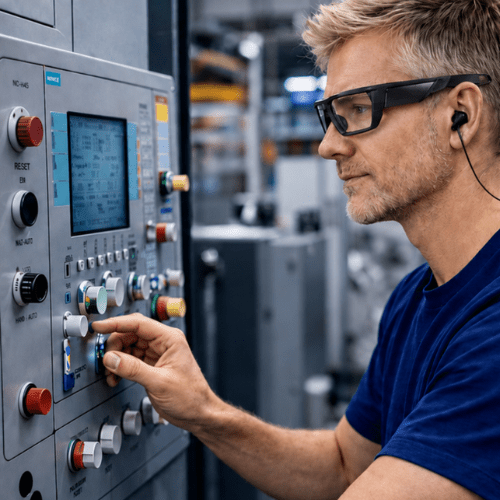
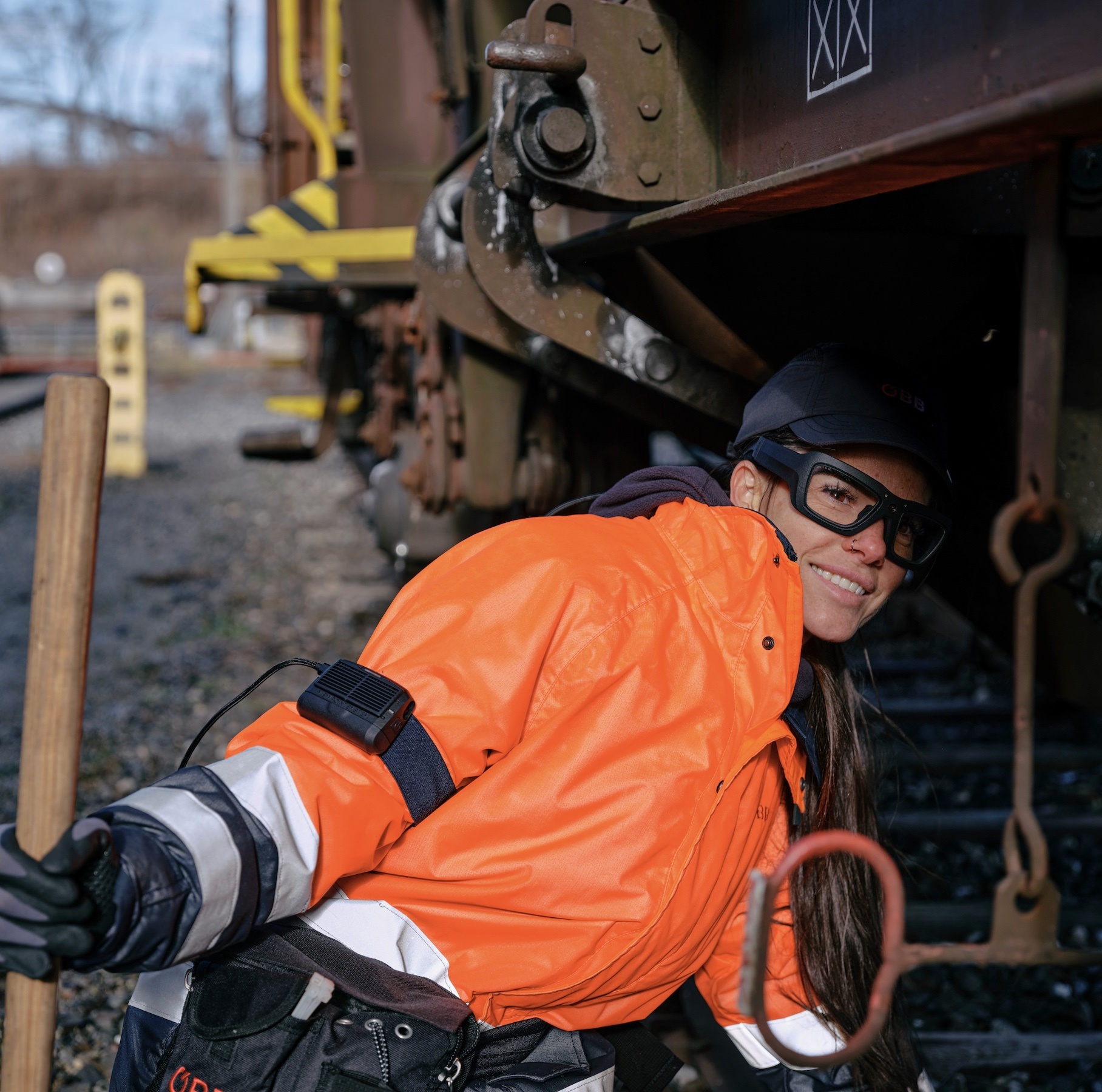
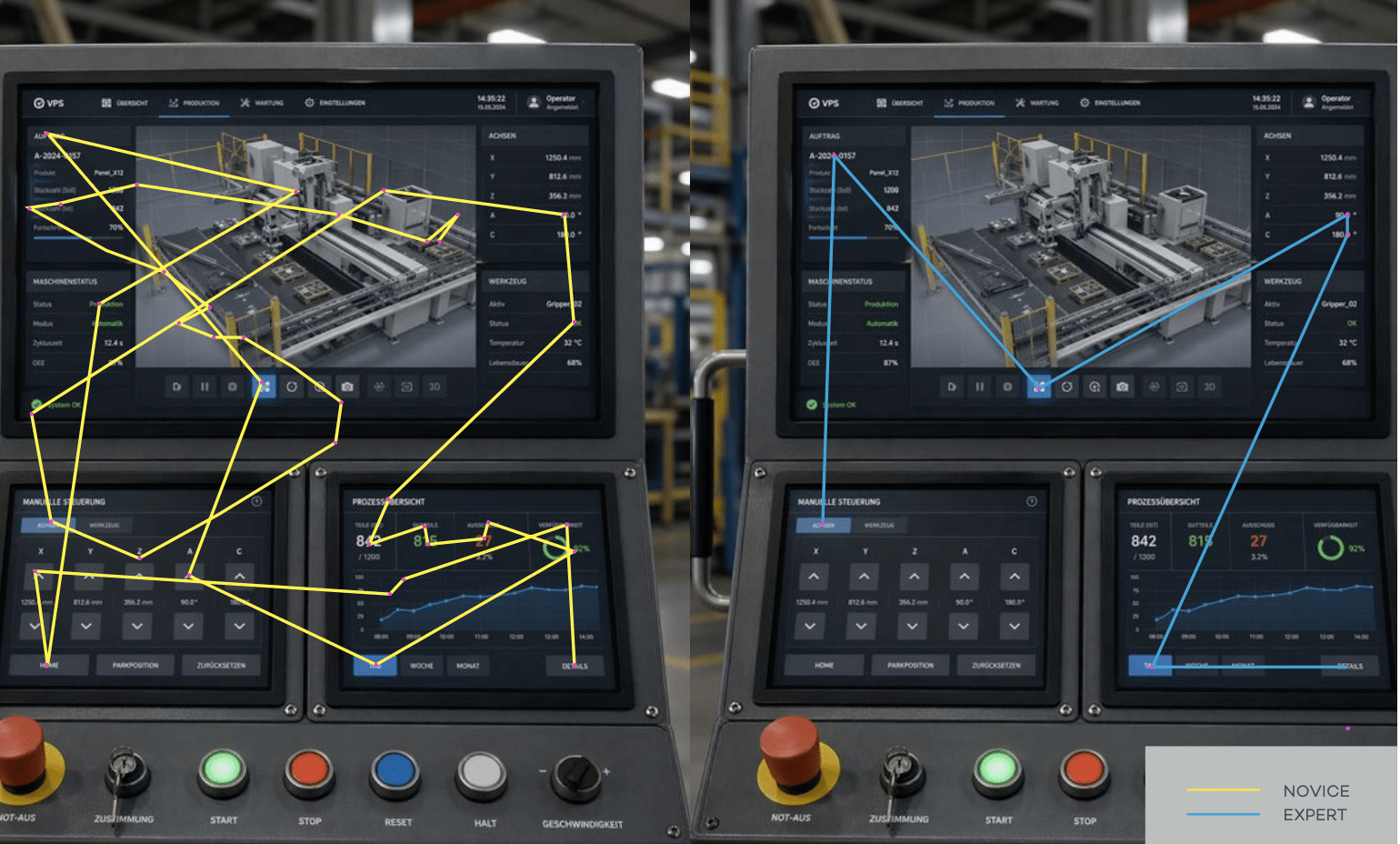
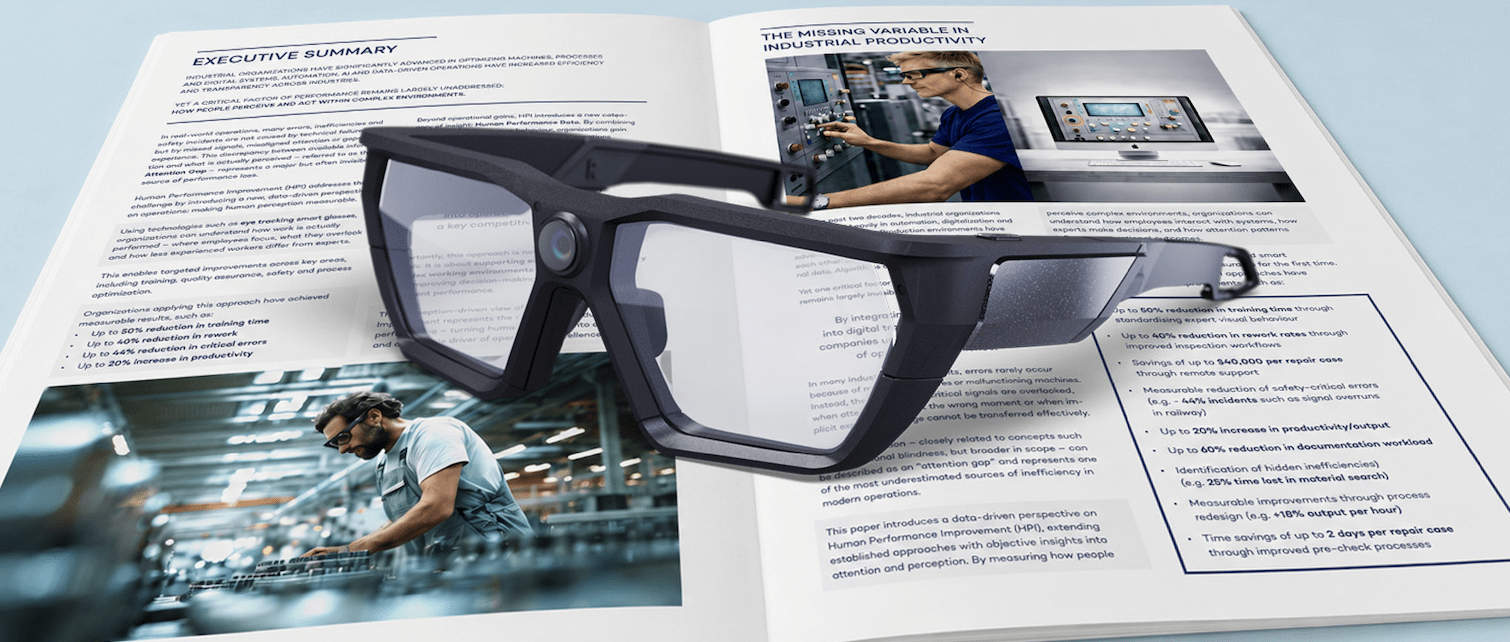
Eye tracking smart glasses are changing that situation fundamentally. Worn like ordinary glasses during real operational tasks, they capture gaze direction, fixation duration and visual scan paths in real time. Rather than relying on self-reporting or assumptions about human behaviour, organisations can observe directly how attention flows through complex environments:
- Which signals attract immediate focus
- Which areas are repeatedly checked
- Which critical information may be consistently overlooked
- How expert attention patterns differ from those of less experienced workers
This creates a new layer of operational insight—one that connects human behaviour with system performance for the first time.
From assumption to measurable insight
By making attention visible through eye tracking data, organisations can begin to address one of the most persistent challenges in industrial operations: the gap between designed processes and actual execution.
These insights allow organisations to:
- Build training programmes grounded in expert attention patterns
- Improve remote expert support by providing real-time insights into what is seen and focused on on site, enabling faster diagnosis and more precise guidance
- Refine procedures based on real observed behaviour
- Identify hidden sources of operational errors before they become incidents
- Redesign interfaces to align with how people actually perceive their environment
The result is a more complete understanding of how performance is created—not only by machines and systems, but by the people interacting with them.
KEY BENEFITS:
- Identify hidden sources of operational errors
- Improve inspection accuracy
- Reduce rework and defects
- Optimise human-machine interfaces
- Improve operational safety
Turn Human Perception into Measurable Performance
VPS Next by Viewpointsystem brings eye tracking into real-world industrial environments—capturing human attention data where it matters most: in the field, during actual tasks.
Whether you aim to optimise workflows, enhance training, improve safety, or uncover hidden inefficiencies, VPS Next provides a new layer of operational insight: how people actually see, interpret and interact with their environment.