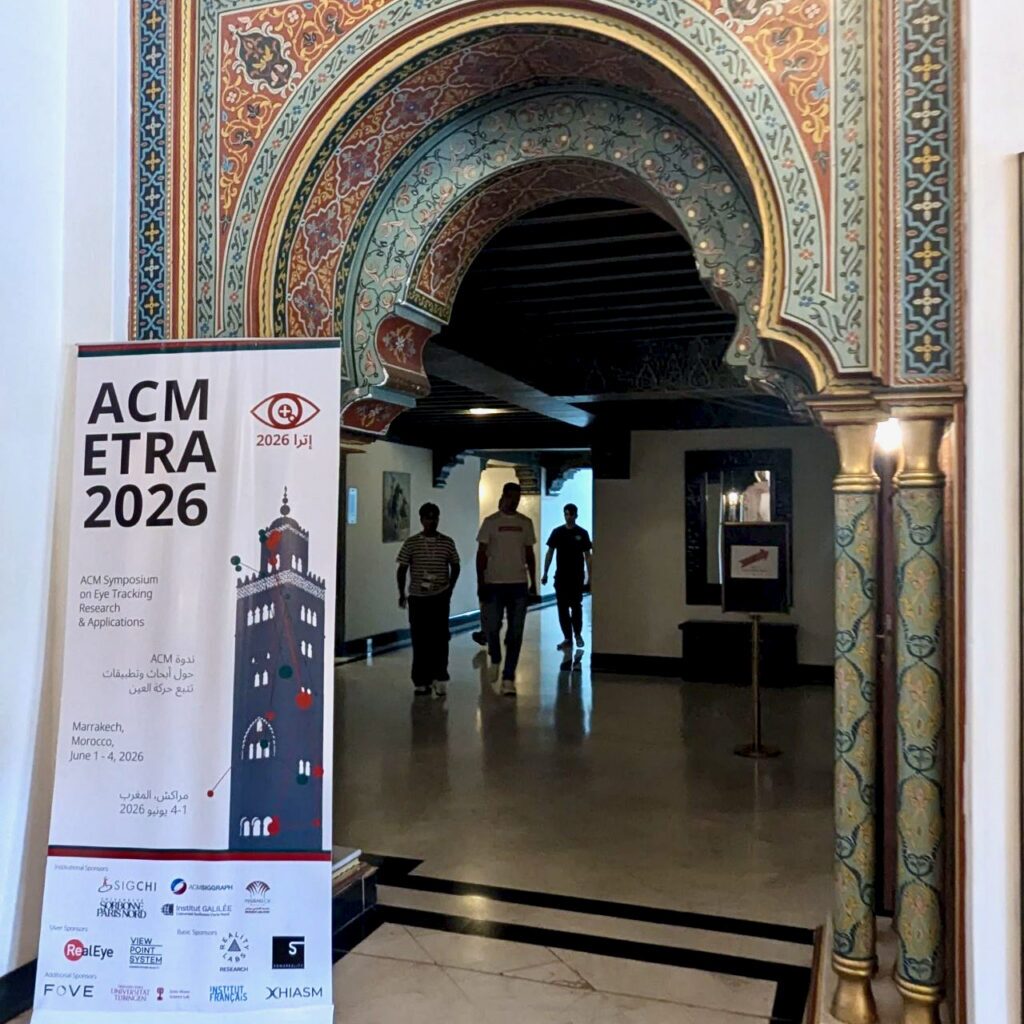
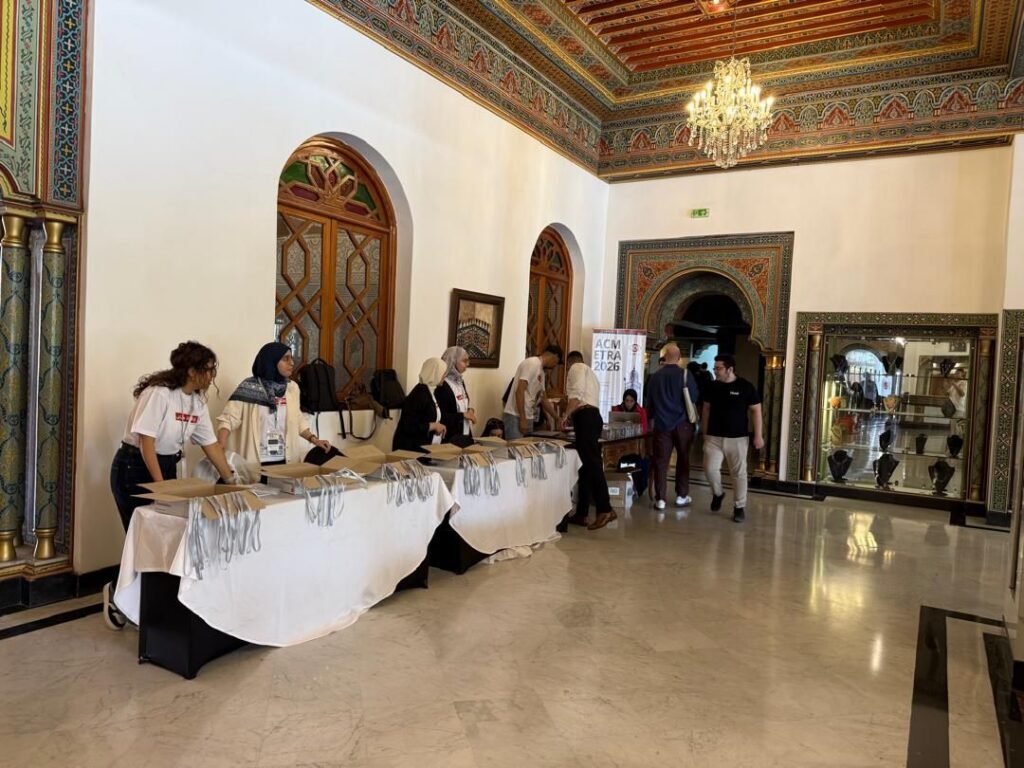
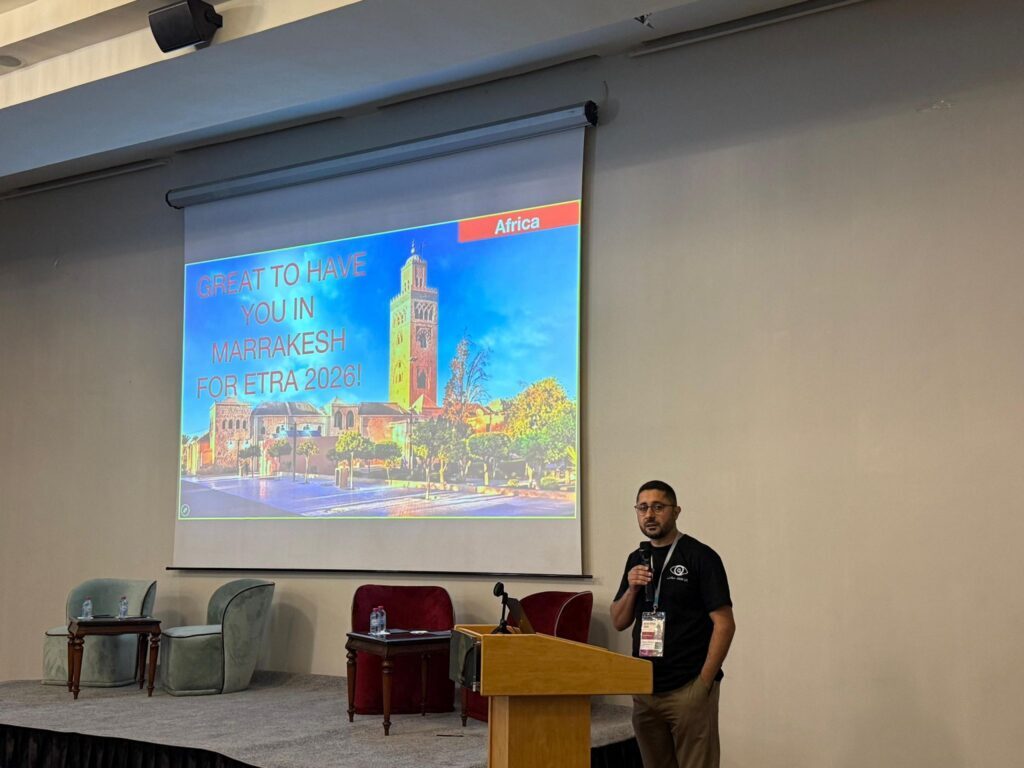
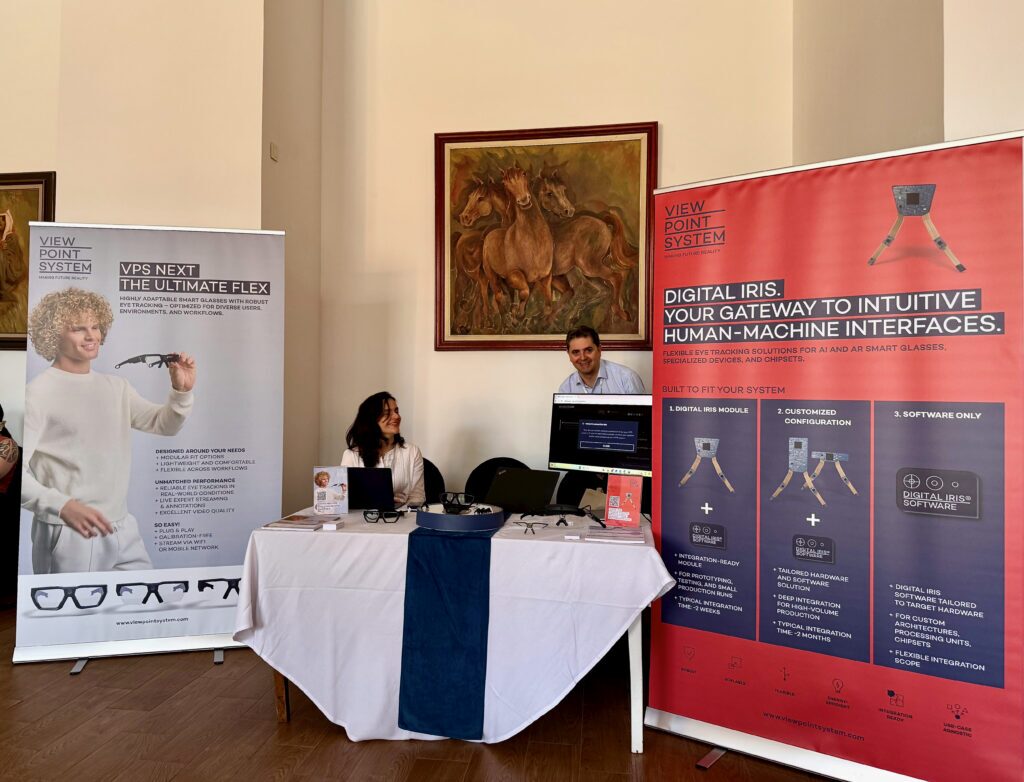
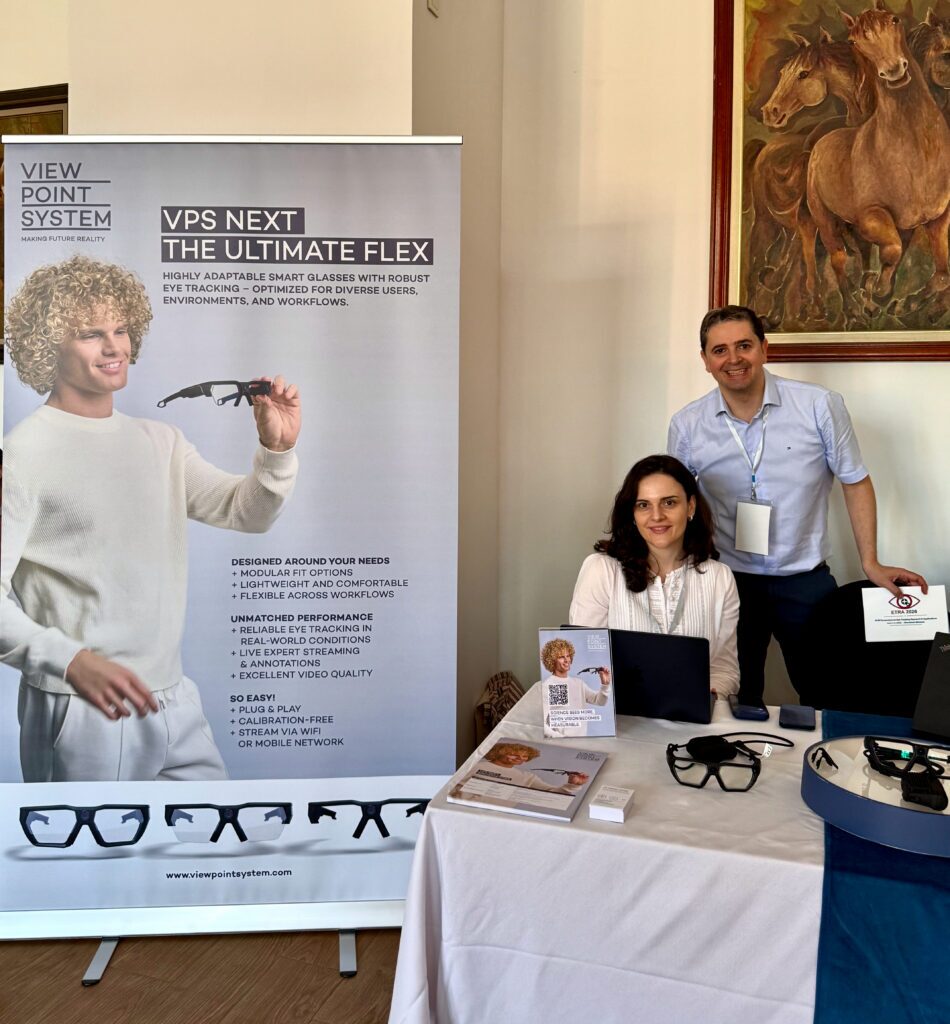
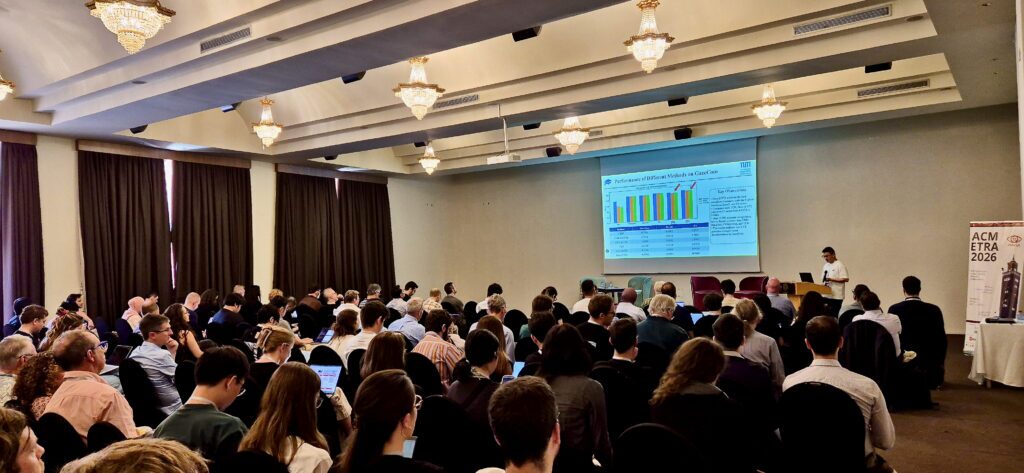
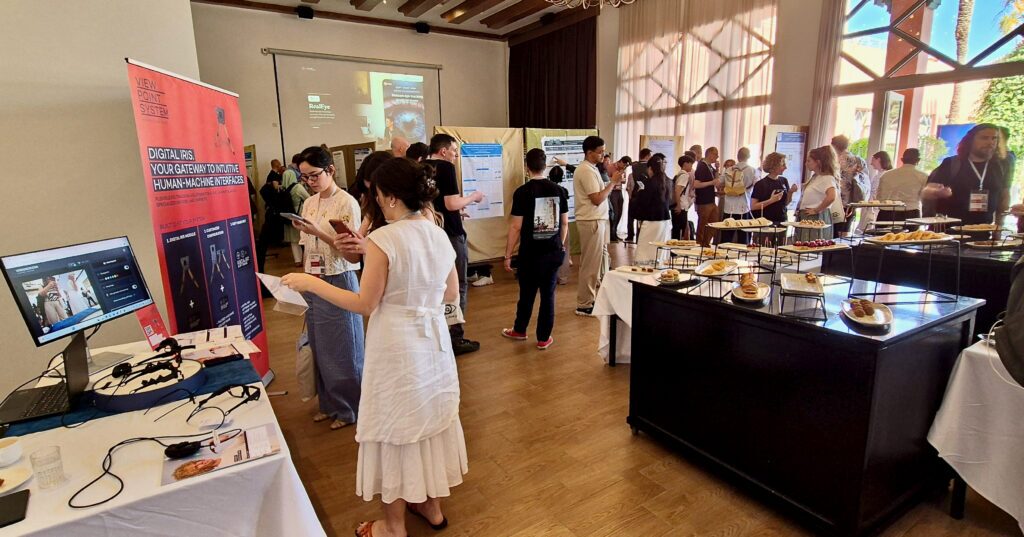
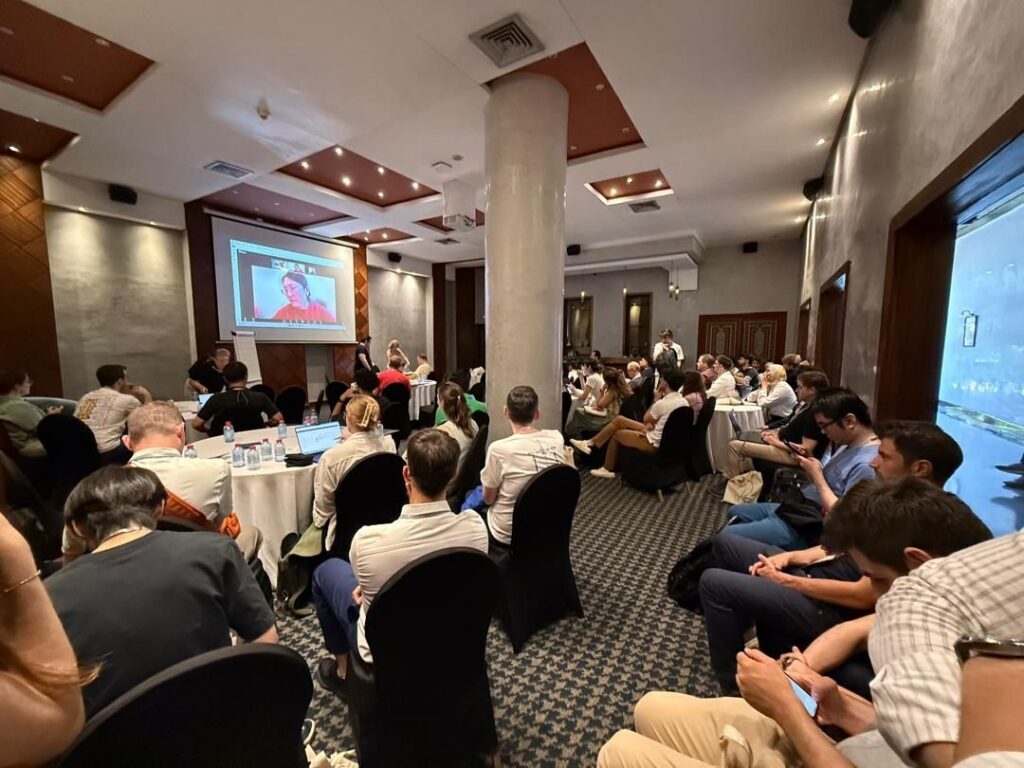
Beyond the official program, some of the most interesting discussions happened in hallways, over coffee, and during the warm Marrakech evenings. ETRA 2026 offered not only a snapshot of current research, but also a clear sense of where the field is heading next.
Looking back on the conference, Dr. Mirjana Sekicki and Dr. Alejandro Hernán Gloriani reflected on the ideas, discussions, and emerging directions that they found most impactful throughout the conference. The following insights are their personal takeaways from Marrakech.
1. Power-efficient eye tracking for XR and AI wearables
As eye tracking is increasingly being deployed in mobile applications and becoming an integral component of wearable XR and AI-powered devices, power consumption is emerging as one of the field’s most pressing technical challenges. For decades, advances in computing performance largely followed Moore’s Law, allowing increasingly powerful processing on ever smaller devices. Today, however, conventional computing architectures are approaching physical and energy-related limits. At the same time, eye-tracking systems are expected to deliver higher sampling rates, lower latency, and more sophisticated real-time processing – often within lightweight, battery-powered devices. The result is a growing interest in fundamentally new approaches to sensing and computation.
This challenge was a central topic at the International Workshop on Sensors, Processing and Hardware for Eye tRAcking (SPHERA). Among the technologies attracting significant attention were event-based cameras, also known as Dynamic Vision Sensors (DVS). Unlike conventional image sensors that capture complete frames at fixed intervals, event-based sensors evaluate dynamic changes in local illumination, at individual pixel level, only reporting dynamic changes in the visual scene. This can enable eye tracking with high temporal resolution while dramatically reducing data rates and power consumption – an attractive proposition for future XR and wearable eye-tracking systems.
However, several discussions at the workshop highlighted that fully exploiting event-based sensing will require more than simply replacing conventional cameras with a new type of sensor. For Alejandro, this was one of the most important takeaways from the workshop: ”The main driver of innovation in XR eye tracking is power consumption. Event-based sensing is highly promising, but to really benefit from it, we need algorithms and processing pipelines that are designed around this new sensing principle.”
The Pupil Center Corneal Reflection (PCCR) paradigm, typically applied in video-oculography (VOG), or other frame-based approaches, should be replaced by pipelines able to operate directly in the event domain, without needing to generate event-based frames. In this regard, Spiking Neural Networks (SNNs) and Graph Neural Networks (GNNs) are two approaches currently being explored in the community, with promising results.
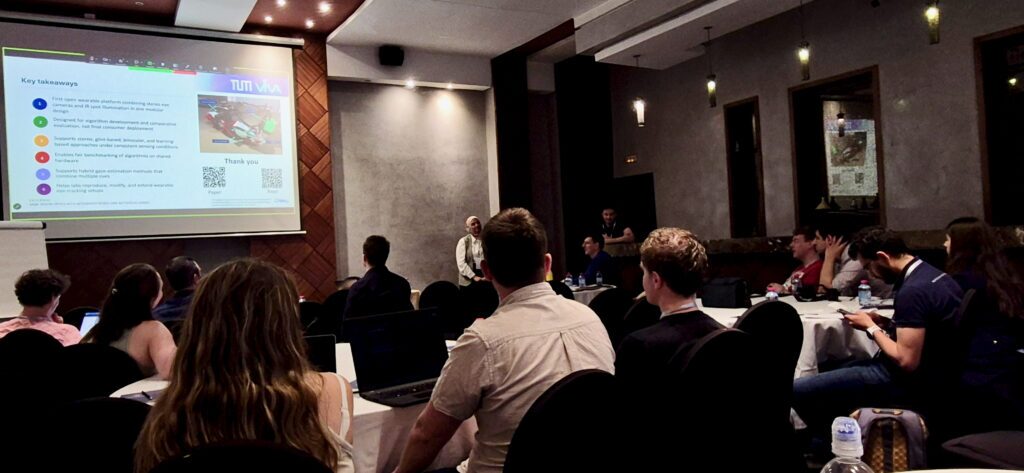
The discussion around next-generation eye-tracking hardware extended well beyond the SPHERA workshop. In conversations with researchers throughout the week, another recurring topic was active illumination. Many eye-tracking approaches rely on infrared (IR) illumination to maximize the contrast between the pupil and iris and be independent of the user’s iris color and ambient lighting. However, this has an impact on power consumption, prompting ongoing discussions about alternative and complementary approaches, including passive illumination strategies, structured IR lighting, and polarized light, among others.

Further reading: Neuromorphic Computing Beyond Eye Tracking
Many of the discussions around event-based sensing at ETRA 2026 connect to a broader shift toward brain-inspired computing architectures. In the Horizon Europe project NimbleAI, Viewpointsystem co-developed together with the University of Manchester a novel SNN-based neuromorphic pupil-tracking pipeline.
READ NOW2. Gaze as a computational signal for AI
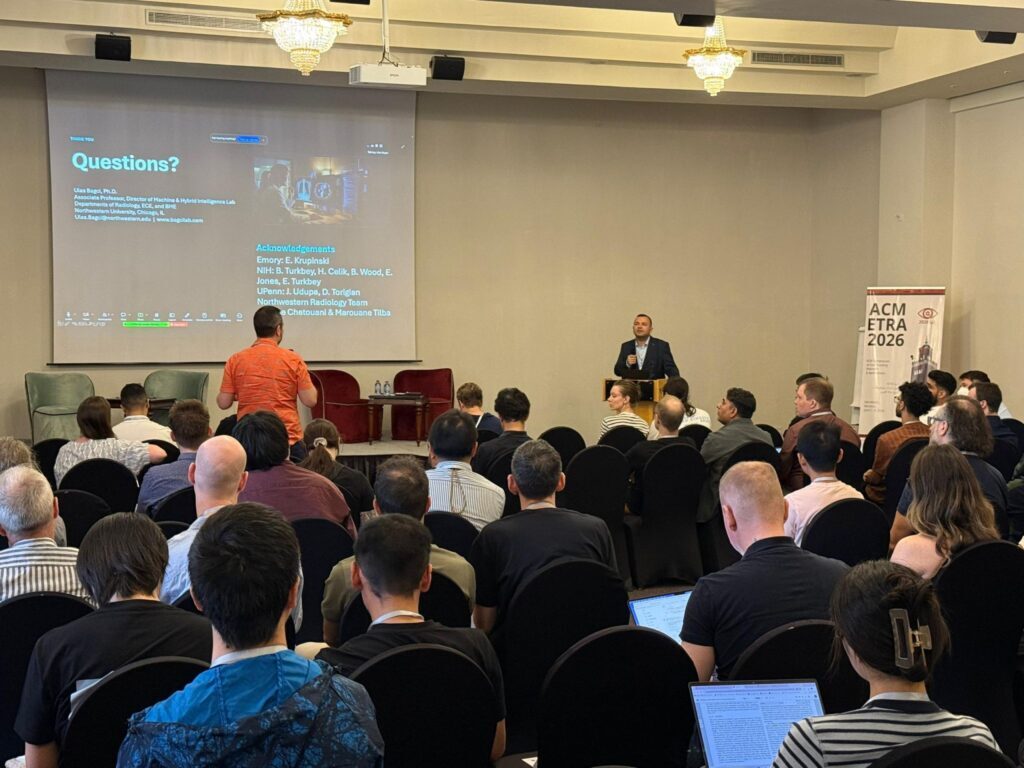
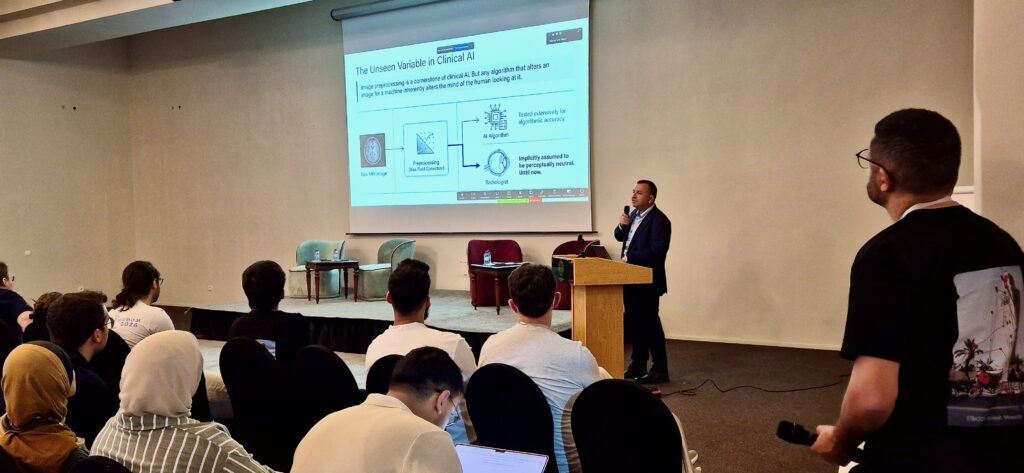
One of the most thought-provoking perspectives at ETRA 2026 came from Prof. Ulas Bagci’s keynote, “Eyes Wide Open: A Decade of Gaze-Guided Medical Intelligence.” In his talk, Bagci explored how clinician gaze can serve as more than observational data. Rather than treating eye movements merely as a record of visual attention, he argued that gaze can become an active computational signal – helping AI systems learn from human expertise, adapt to user behavior, and support decision-making in complex tasks such as medical image interpretation.
Using radiology as an example, Bagci demonstrated how eye tracking can bridge the gap between human expertise and machine intelligence. Both radiologists and AI have their respective biases. To address this challenge, Bagci and his team devised an ingenious way to allow AI to complement human judgment and provide additional insight into areas one may have missed to examine. By incorporating information about how experts visually inspect an image, AI can identify which regions have already been examined and draw attention to potentially relevant findings that warrant further consideration. In this way, eye movements become a communication channel between clinician and AI, allowing each to complement the other’s strengths and limitations. As Bagci put it, “Expert gaze is compressed clinical intelligence.”
The implications extend far beyond medical imaging. Gaze can reveal intent, attention, expertise, uncertainty, and decision-making processes, opening new possibilities for adaptive and trustworthy AI systems. At the same time, the keynote highlighted that implementation matters. While Bagci sees strong potential for webcam-based gaze tracking in radiology, wearable systems could play an important role in areas such as telemedicine and remote medical support, where access to expert knowledge remains limited.
3. Bringing eye tracking closer to real-world human behavior
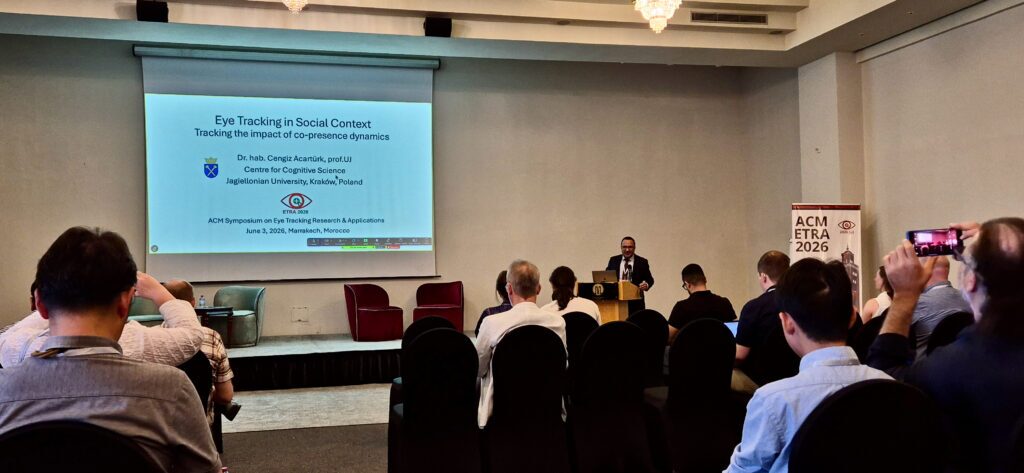
Another keynote that sparked discussion was Dr. Cengiz Acarturk’s “Eye Tracking in Social Context: Tracking the Impact of Co-Presence on Gaze Dynamics.” His work explored a deceptively simple question: how much do we miss when we study gaze in isolation? The findings suggest that even the subtle presence of another person can influence visual attention and eye-movement behavior, despite the absence of direct interaction or communication.
For researchers, the implications are significant. Many phenomena studied with eye tracking – from learning and collaboration to social interaction and decision-making – naturally occur in the presence of others. Yet experimental paradigms often remove participants from these social contexts. Acarturk’s keynote highlighted that when co-presence affects gaze behavior, its absence is not merely a neutral control condition but a methodological choice that may shape the outcome of a study.
For Mirjana, this was one of the most thought-provoking messages of the conference: “The keynote was a strong reminder that eye tracking is ultimately a tool for studying human behavior. And human behavior is often social, situated, and context dependent.” As eye-tracking research is increasingly moving into real-world environments, questions of ecological validity are likely to become even more important.
Looking ahead
ETRA 2026 showed a field that is both technically ambitious and increasingly application-aware. Power-efficient sensing and neuromorphic processing are becoming essential for XR and wearable systems. Gaze-guided AI is turning eye tracking into a potential interface for human-AI collaboration. Socially situated research is challenging researchers to rethink experimental paradigms. And robust performance beyond the lab remains a condition for translating research into practice.
For the eye-tracking community, these are not separate developments. They point in the same direction: toward systems that are more efficient, more intelligent, more context-aware, and more capable of operating where human behavior actually happens.
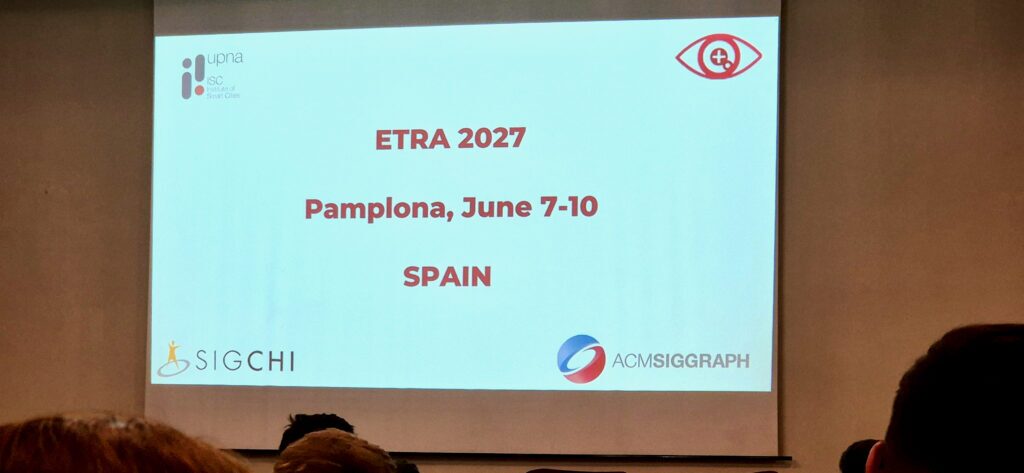
It will be exciting to see how these discussions evolve over the coming year – and which new perspectives emerge when the eye-tracking community gathers again at ETRA 2027 in Pamplona, Spain.