Remote support: bringing expertise to where the fault happens
If you produce at several sites, the right expertise is often somewhere else. When a machine fails, a maintenance issue comes up or something unexpected happens, time quickly becomes critical. The right expert may be at another site, fully booked, or simply hard to reach. Sending someone out costs time and money. A phone or video call, meanwhile, often lacks the context to narrow down the problem quickly.
With remote support through smart glasses, the expert sees live what the on-site team sees and can guide them step by step, without having to travel. How well that works depends on how accurately the expert can grasp the situation from a distance.
The hidden cost of dispatching an expert (travel days + downtime)
Picture a bottling line grinding to a halt. To illustrate what that might cost, let’s look at an example calculation: a large drinks manufacturer loses more than 23,000 bottles of output for every hour the line stands still, roughly €33,000 in lost turnover per hour. The plant’s own staff can’t fix the fault, so a specialist has to travel in from headquarters. By the time they arrive on site, factoring in travel and preparation, twelve hours have passed, and the total loss of sales has climbed to €400,000. Cut that response time down to a single hour, and the same calculation could show savings of €367,000.
How much short downtime matters is shown by a 2024 interview study from Frankfurt University of Applied Sciences, covering 36 companies in mechanical and plant engineering. Thirty-one of them see shorter downtime as the main benefit of remote services (in this case, live video with AR overlays directly in the image). Cost savings from avoided travel are also mentioned frequently, but were ranked as less important by comparison.
What a visible gaze point changes in remote support
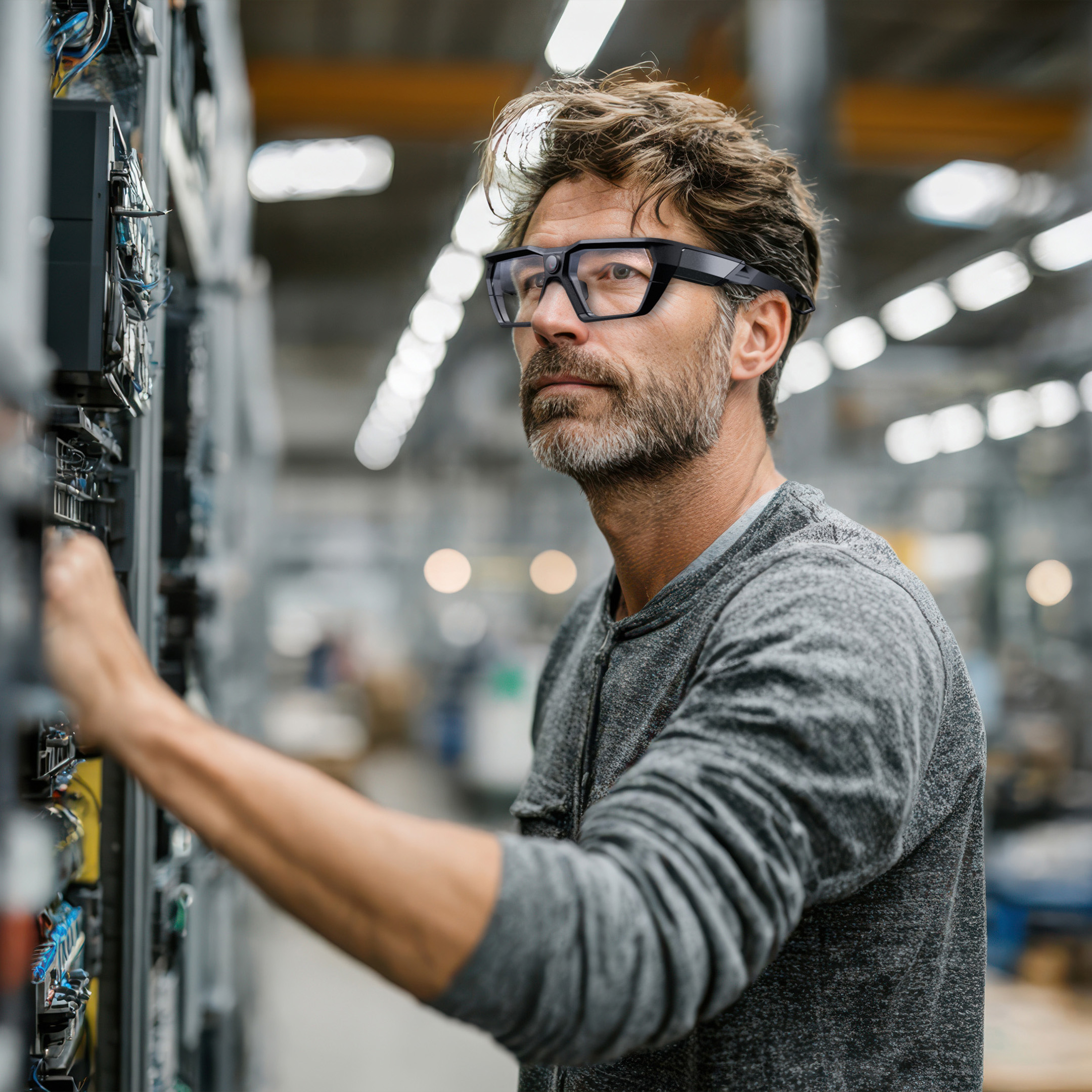
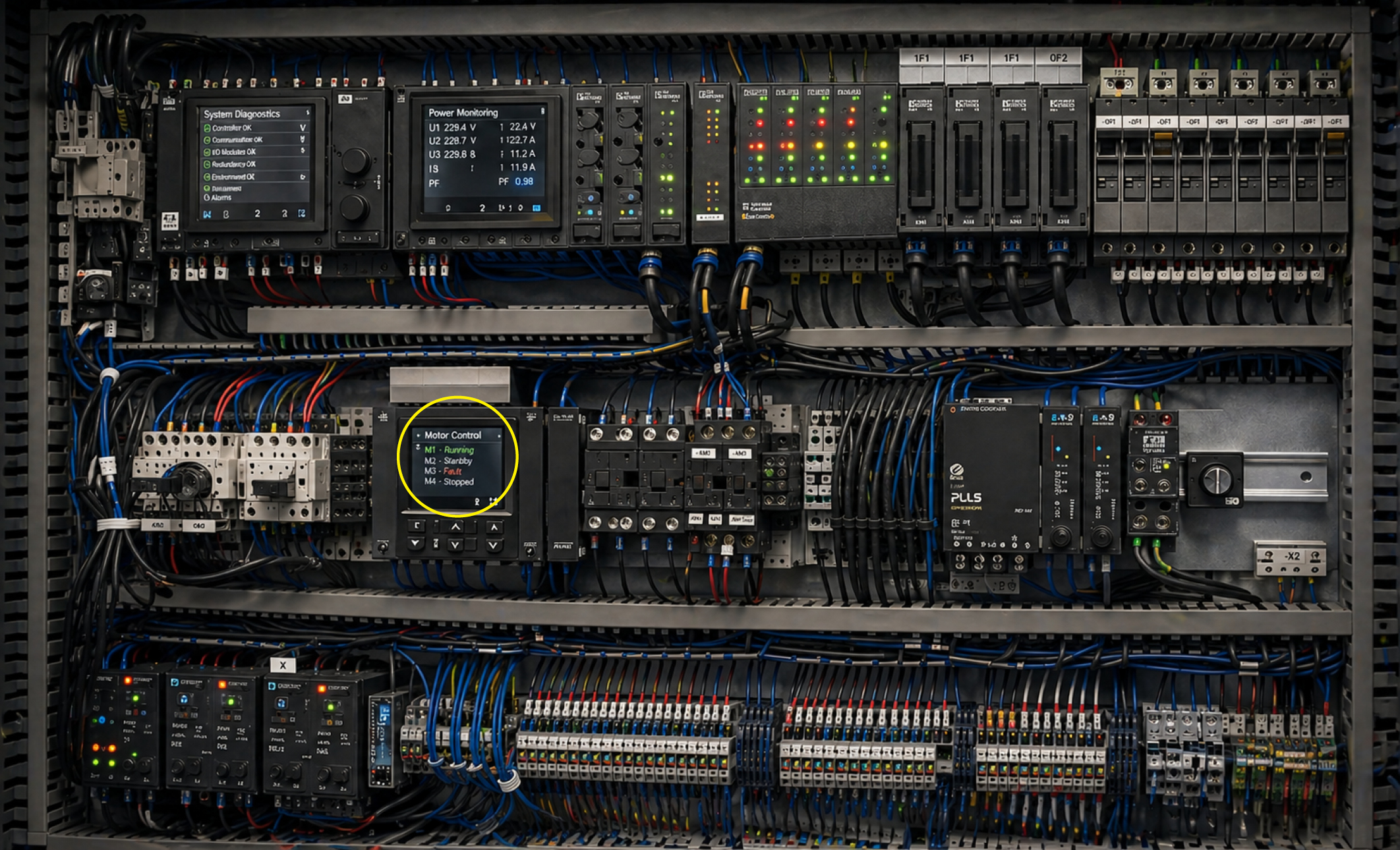
A head-mounted camera shows the expert which direction the person on site is looking, but not exactly what they are looking at. That provides important context but leaves room for interpretation. Eye tracking can narrow that gap: a gaze point in the live image shows what the person on site is looking at at that moment.
A live image is also possible with remote support via smartphone or tablet. What the gaze point adds is that the expert can see whether the person on site is looking at the right components or should focus on a different spot. That lets the expert step in sooner and give more targeted guidance.
This can help with language barriers too: when the image shows what someone is looking at, a lot can be shown rather than described. That can make collaboration in international teams easier.
Hands-free vs. holding a phone: why it changes the workflow
A technician holding a smartphone up to a component with one hand, attempting to angle it to get the camera on the right spot, also has to use the other hand to execute the actual repair. It’s an awkward compromise, and anyone who’s tried to fix something one-handed while filming it with the other knows how it slows the work down.
With smart glasses, both hands stay free for the actual work. Steps can be carried out without constantly putting the phone down and lining it up again. That means fewer interruptions and a smoother, more efficient workflow.
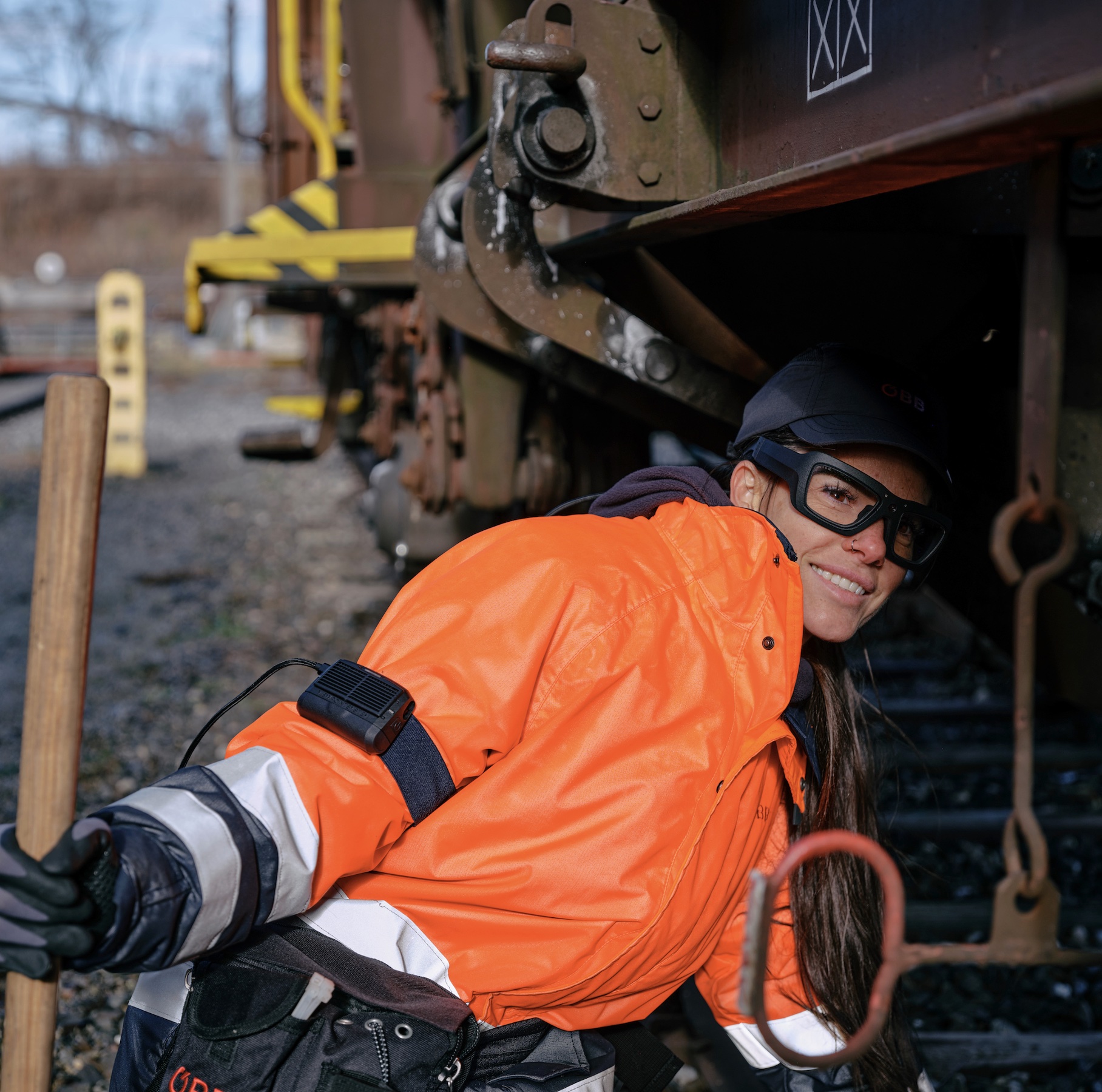
For work on machines and plants, though, the glasses should be as light as possible and stay in place even when the wearer moves. One way to achieve that is to house the transmission technology elsewhere on the body rather than in the frame, which keeps the weight on the head low.
After all, anyone working on a machine rarely stands still: technicians lean forward, reach for tools, turn their heads or climb onto parts of the equipment. If the glasses stay firmly in place, the live image and gaze point display remain stable.
Where the Data is stored and controlled
Remote support works via live stream, which is inherent to the approach. Once the connection is established, the on-site image is transmitted to the expert. The transmission should be encrypted, so that the stream is protected from access by unauthorized third parties while it is being transmitted.
For anything stored afterwards, the recommendation is local storage on the device rather than automatic upload to a third-party cloud. Backups can be kept within your own infrastructure if needed. Access control, encryption and clear deletion rules are based on GDPR and the privacy-by-design principle.
That leaves the company itself in charge of storage, retention, backup and deletion.
Where it does not apply (regulated sign-off environments)
Remote support does not replace every form of on-site presence. This applies above all where a personal sign-off is required by law. Depending on the regulations, this includes, for example, recurring inspections of elevators or pressure vessels by an approved inspection body, or the release of an aircraft after maintenance by authorized personnel. Remote support can still make the preparation easier: the on-site team shows what it sees through the smart glasses, and an expert determines remotely whether there is actually a defect, which parts and tools are needed, and who has to travel for the sign-off. The certified person can then arrive better prepared.
In regulated industries, the question is therefore not whether remote support replaces the sign-off, but where it can reduce the effort around it: through a faster initial assessment, better-prepared visits and fewer trips for problems that, in the end, don’t need anyone on site.
Conclusion: shorter downtime and better-distributed expertise
The biggest lever in remote support is the time it takes to get help. In the study mentioned at the start, shorter downtime is the top priority for most companies. As a strategic goal, 17 of 36 (47 percent) name higher service quality, and 6 of 36 (17 percent) name cost savings.
Then there is the skilled-labor shortage. Only four companies explicitly named higher service efficiency as a goal, but according to the researchers, a lack of service staff came up in the vast majority of interviews. Remote support can help spread scarce expertise further: one expert can support several customers or sites in turn, without traveling in between. Eye tracking adds information about what the person on site is focusing on, which can make instructions more precise.