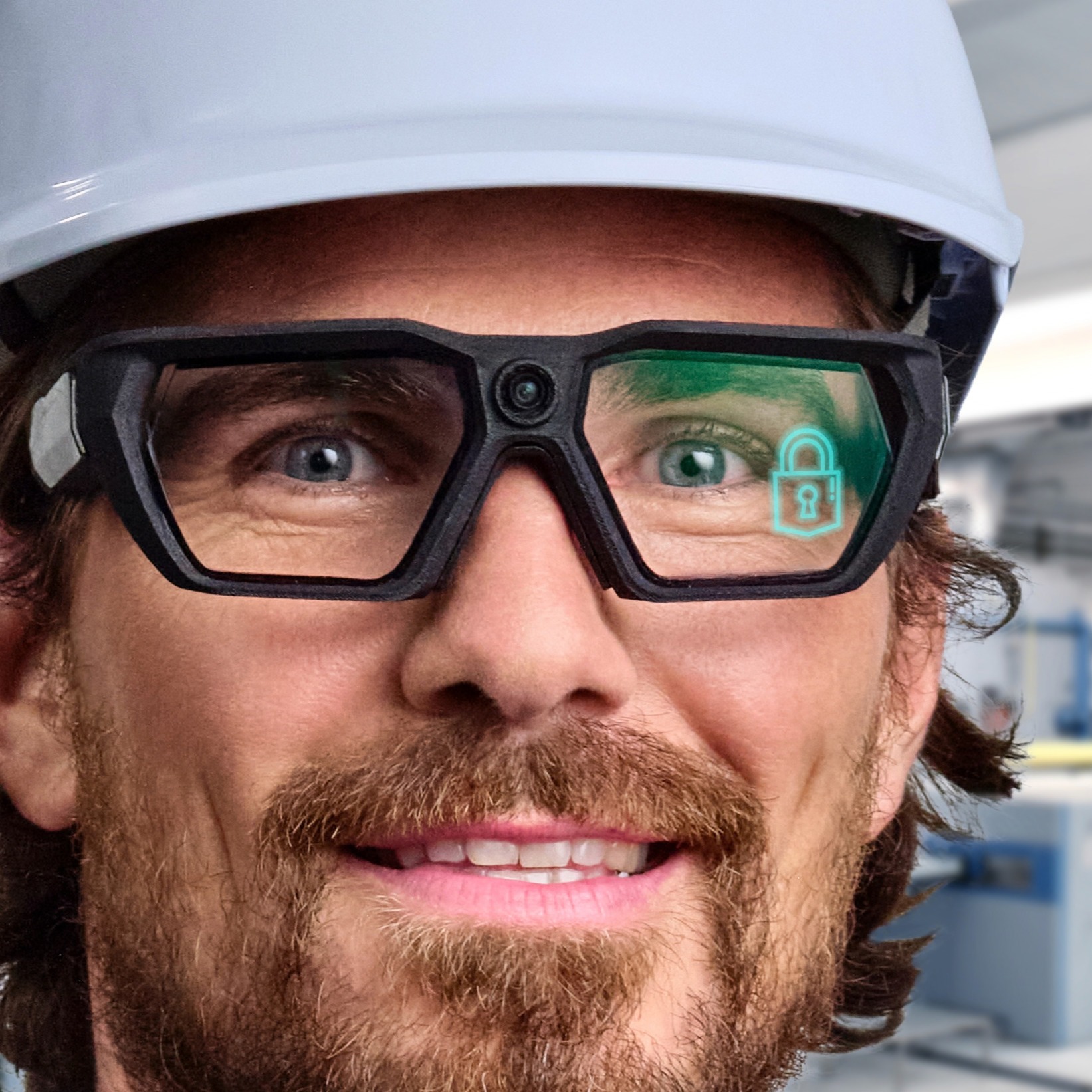
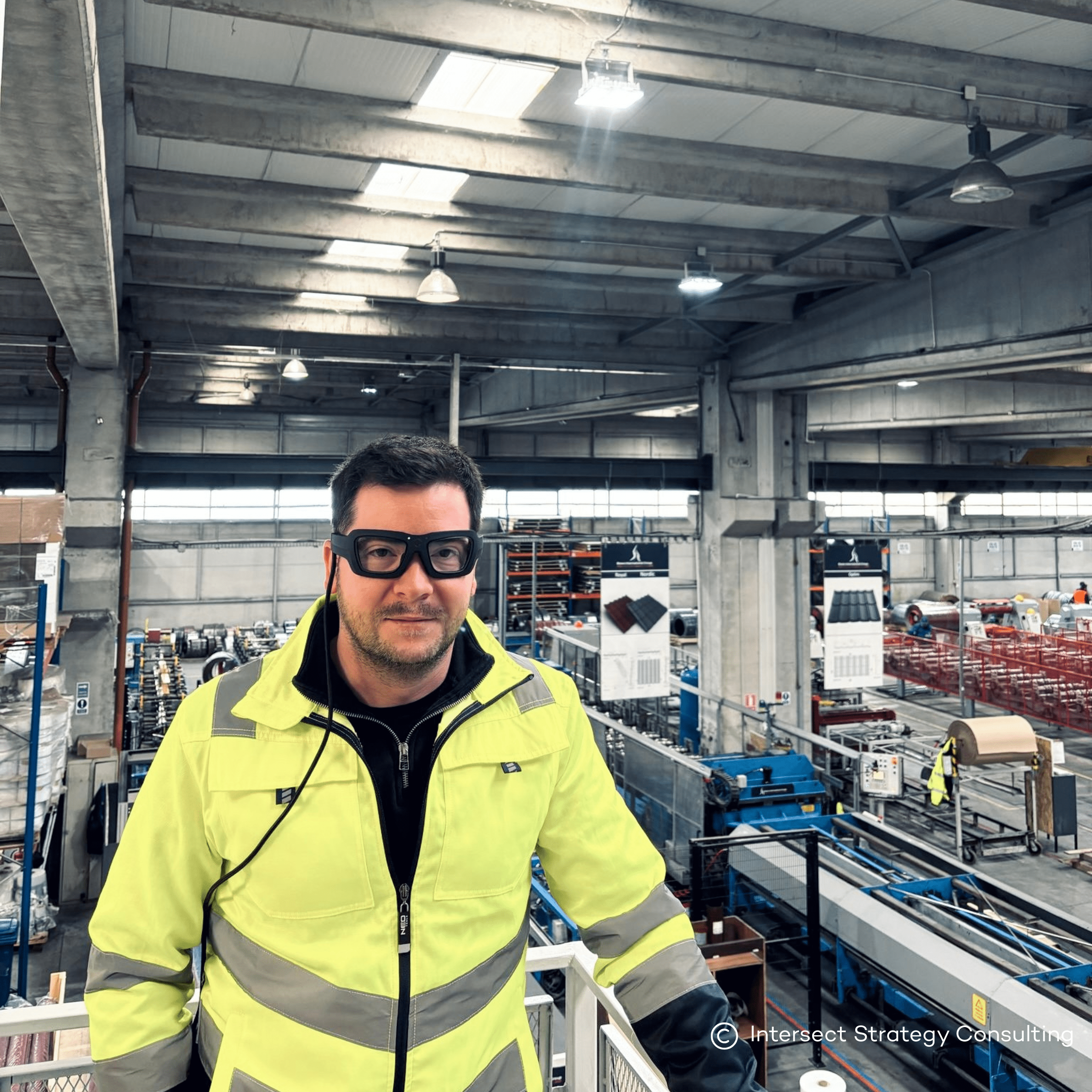
But why are these comparatively simple devices succeeding where AR glasses have struggled for years? And what role could they play beyond consumer applications?
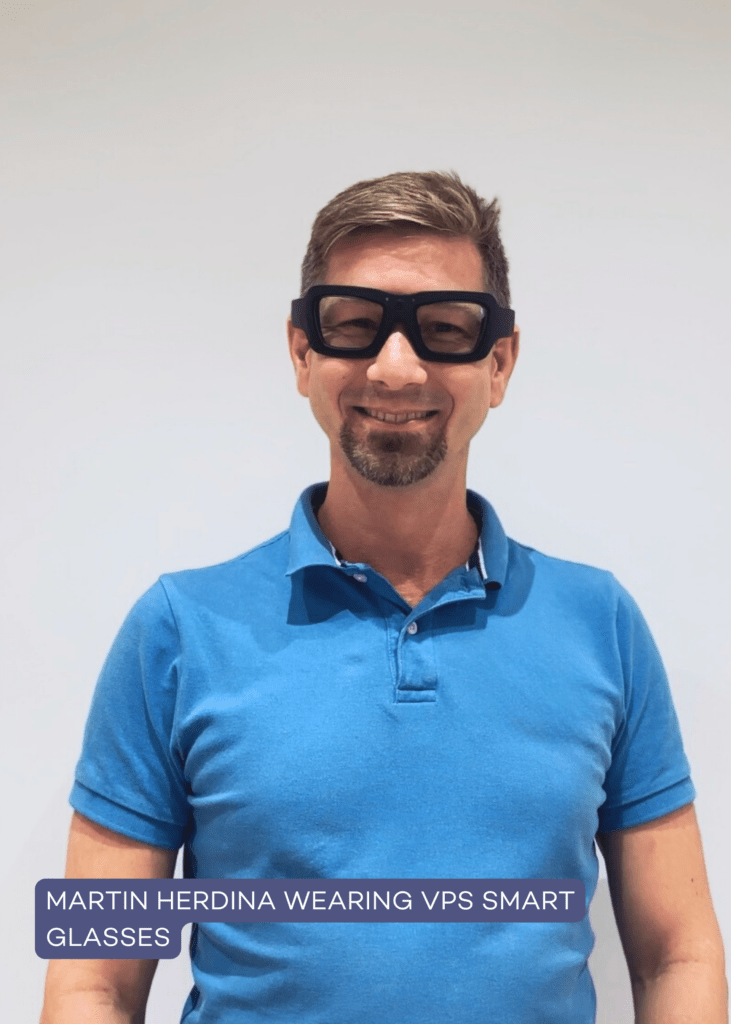
To dig a little deeper, we caught up with Martin Herdina, Strategy Consultant at Viewpointsystem, following the “Future of XR and AI Glasses” panel he moderated at XRCC 2026, a global XR and AI conference. We talked about what’s behind the AI glasses boom, why AR is still finding its place, and how eye tracking could shape the next generation of smart eyewear.
AI glasses are suddenly everywhere. What’s driving the current boom?
Martin Herdina: Ray-Ban and Meta’s smart glasses were initially pitched around personal content, like capturing and sharing photos and video,” Martin says. “Generative AI has now finally given smart glasses something they have been missing: a genuinely compelling, everyday use case. Where earlier wearables struggled to justify themselves, today’s devices can answer questions about things around you, translate on the fly, or help you navigate, all through natural voice interaction, without you having to reach for your phone.
Hardware has caught up too, in part by taking a step back to find the right product market fit. Without a display to power, these glasses can be lighter, cheaper, and last a full day on a single charge, which is a major shift from earlier AR attempts. And familiar designs, like Ray-Ban and Oakley, have helped normalise the smart glasses category: they look and feel like sunglasses people already wear, not a new gadget people have to be convinced to try. That combination, mature AI and a stylish form factor people actually want to wear, is why consumers are finally buying in. For the industry, the logic is slightly different: after years of AI hype, smart glasses are the hardware that finally gives AI a physical form factor, which is what’s driving the current wave of investment.
People might have expected AR glasses to become mainstream first. Why did AI glasses get there earlier?
For me, this ultimately comes down to acceptance as well, rather than pure technology. AI glasses succeed by building on something already trusted and familiar, then layering intelligence on top. This is the same pattern that made the iPhone work: it built on the familiar iPod and added phone functionality. AI glasses build on familiar items such as sunglasses and basic personal content creation and sharing functionality and add AI functionality on top.
AR, by contrast, is simply a harder technical problem. It requires advanced displays, precise optics and significantly more processing power – all of which add cost, weigh the device down, and drain the battery faster. Beyond the hardware burden, AR devices have typically demanded that users learn an entirely new way of interacting, such as thinking spatially, tracking hand gestures, navigating interfaces that don’t map to anything people already know. Voice, by contrast, is an interface people already find intuitive. There’s nothing new to learn. For earlier devices, that added complexity stood in stark contrast to how little everyday benefit they actually delivered, which created a mismatch that held back adoption more than most technical shortfalls.
AI glasses sidestep this problem: they deliver real, immediate value without needing to solve AR’s hardest engineering challenges first. That doesn’t mean AR is failing – it’s simply on a longer development path and still needs further technological advances before it can reach the mainstream the way AI glasses already have.
Privacy concerns around the built-in cameras have resurfaced. Given that, what’s being done to address them?
The technology is currently moving faster than legislation and social norms are, and there simply aren’t clearly established rules yet for what is acceptable when it comes to things such as recording in public with such devices.
Many of the same concerns already exist with smartphones, a device most people carry and use to record others every day. What is different with AI glasses is subtler: even with LED recording indicators, they’re less obviously a recording device than a phone held up and pointed at someone, which makes it harder for bystanders to know when they are being filmed. At the same time, that same subtlety can work in the other direction – recording feels more natural and less intrusive, which often leads to more authentic, less staged moments than when someone visibly pulls out a phone.
Closing that gap isn’t a job for any one group alone. It requires a joint effort between the legal system, society and product design to establish clear norms for recording in public, norms that don’t exist yet, but that the technology’s current pace makes increasingly necessary. In enterprise settings, this is already further along: privacy requirements tend to be stricter, with clear policies and defined use cases guiding how the devices are used.
Beyond consumers, do you see promising opportunities for AI glasses in industry and enterprise?
The catch is that none of this works out of the box. Realising this potential requires specially trained AI software tailored to these use cases – something the standard consumer models on the market today simply don’t offer. There’s also a hardware gap: consumer devices aren’t built for industrial conditions, and they lack the certifications and durability standards those environments require. Even something as straightforward sounding as step-by-step work instructions needs that dedicated software layer to actually work in practice; it’s not something you get out of a standard consumer device.
What role can eye tracking play in future AI glasses?
Voice commands and cameras only go so far – they tell a device what you’re saying or what’s in front of you, but not what you’re actually paying attention to. That’s the gap eye tracking fills. By understanding where someone is looking, glasses gain a layer of context that voice and camera input alone can’t provide, and interaction starts to feel less like issuing commands and more like the device simply keeping up with you.
In practice, this comes down to combining gaze direction with voice commands or subtle micro-gestures. Look at something and ask, ‘what am I looking at?’, or identify the ‘object of interest’ even in a complex scene, based on where you’re looking. Dwell on an object a little longer, and that alone can trigger an action – no explicit command needed.
There’s also a less obvious application worth watching: personal health. Eye behaviour, combined with data from other devices like a wrist-worn sensor, could offer a window into things like cognitive load, stress levels and wakefulness, turning glasses into part of a broader health-monitoring toolkit rather than just an interface.
Will AI glasses, AR glasses, and XR headsets eventually converge into a single device?
In the short term, at least, the answer is no. Different devices will keep serving different purposes. AI glasses, AR glasses and XR headsets aren’t really competing for the same job; they’re built around different trade-offs between weight, battery life and capability, and that’s likely to hold rather than collapse into one universal device.
The more interesting question is what happens over the long term, and here I’d expect coexistence rather than convergence. Not unlike smartphones and tablets, which handle overlapping tasks but have remained distinct form factors because each is better suited to different situations. If anything, the AI-glasses category itself is likely to keep splitting further rather than merging: audio-only glasses for voice assistants, monocular-display glasses for notifications and simple navigation, binocular-display glasses for virtual screens like video calls, full AR glasses for spatial computing and scene understanding, and separate VR/MR headsets for fully immersive experiences. Each solves a different problem well, rather than one device trying to solve all of them adequately.
The destination looks less like a single converged device and more like a growing family of specialised wearables, each suited to a different task, increasingly working together as one connected system.