Where You Look Is Usually What You’re Thinking About
In a recent webinar, “Inside the World of Eye Tracking for Augmented Reality”, in collaboration with The AR Alliance, our Sensors, Data & Intelligence specialist Roman Schmied highlights an interesting point: the word “focus” does double duty. It can mean concentrating on a thought, or pointing your eyes at something. In people, these two usually line up, we look at what we’re thinking about. That’s why gaze tracking in AR wearables is interesting in the first place. As he put it in the webinar, “eye tracking is attention tracking.” It doesn’t capture everything going on in your head, but it’s a strong signal of what matters to you in that moment.
So what does Eye Tracking actually pick up? And what can a system do with this information?
What an Eye Tracker Actually Measures
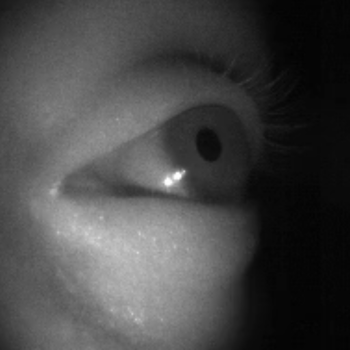
At a basic level, smart glasses technology with eye tracking picks up three simple signals. First, where you are looking, the direction of your gaze, is updated in real time. Second, your pupil size, which changes depending on light but also shifts when you are concentrating or caught off guard. Third, how often you blink, which tends to drop when you’re focused and increase when you are getting tired.
On their own, these don’t say much. But together, they start to form a pattern. Roman described it with a simple example: you’re walking through a dark forest and hear something in the bushes. Your pupils widen to take in more light. You stop blinking. You fix your gaze on the source of the sound. In that moment, your body is reacting before you’ve even decided what to do.
This combination of signals is what makes eye tracking useful for AR. It’s not about a single measurement, but about how the system fuses multiple inputs – such as gaze direction, pupil size, and head position – to infer what the user is actually looking at and how they are engaging with it.
Two Real-World Scenarios
One example is relatively direct and close to Augmented Reality in practice. A person wearing AR glasses looks at a plant, and the system describes it out loud – what it is, how it’s growing, and whether it’s about to bloom. The setup combines eye tracking with object detection and speech: you look at something, and the system responds. Roman describes this as reacting, a direct link between attention and output. In this case, eye tracking makes AR more accurate by ensuring the system responds to what the user is actually looking at.
While AI smart glasses can answer “What am I looking at?”, they usually rely on the center of the camera frame, which may not match the user’s focus. Eye tracking reduces this gap by capturing attention directly.
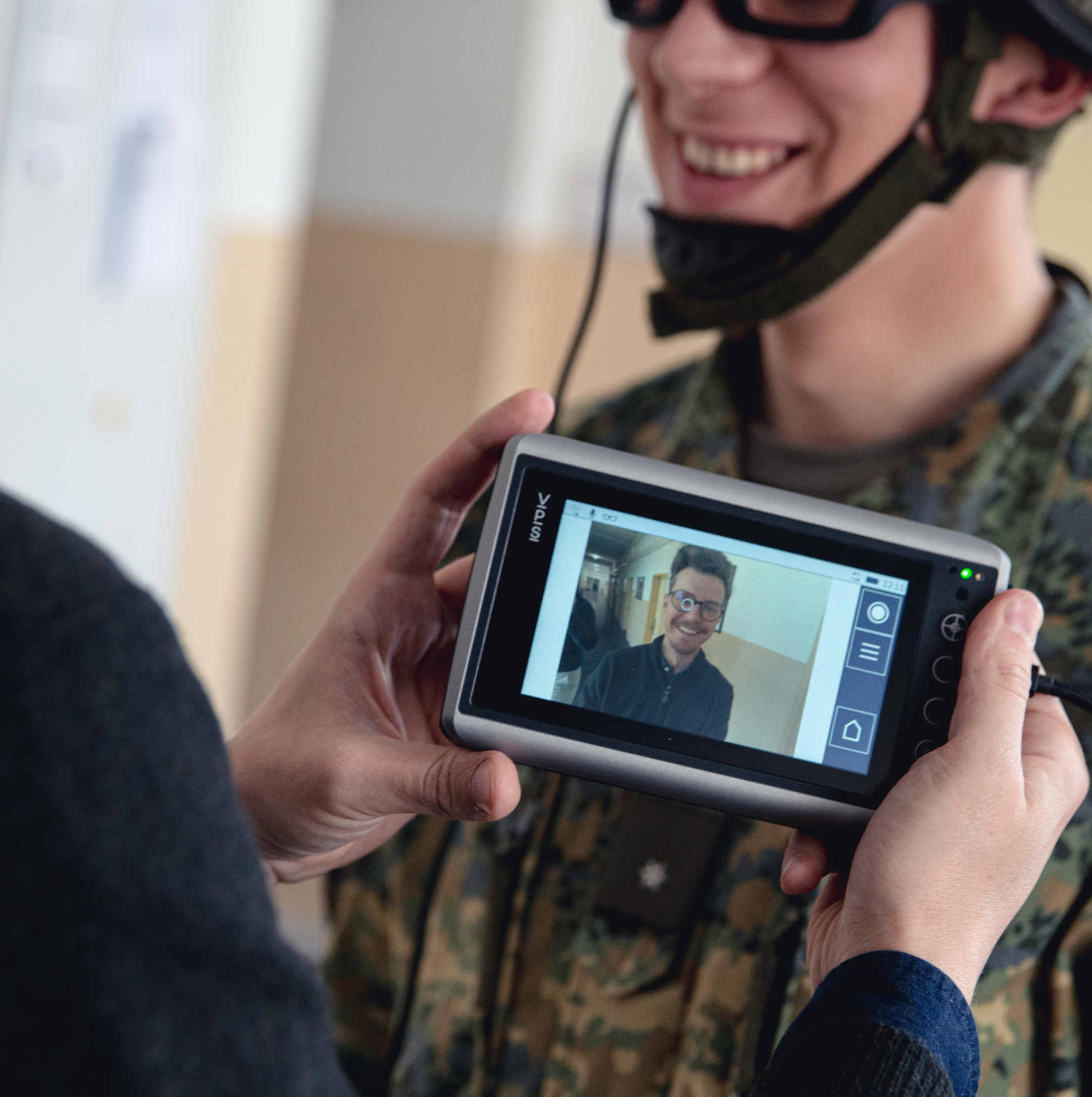
The second example is less about AR itself, but about what eye tracking can reveal. In a hospital training scenario, doctors respond to a simulated emergency using a medical dummy. By analyzing eye movements, differences emerge in how experts and beginners approach the task – what they focus on and how attention shifts under pressure. Here, eye tracking does not drive AR output, but makes patterns of perception and expertise visible.
Together, these examples show what eye tracking enables: more accurate interaction in AR and deeper insight into human attention.
These are some examples, but the bigger point is about where all this is headed.
From Reacting to Responding
There’s a difference between simply reacting to eye data and actually using it well. Reacting is the straightforward case: someone looks at something, and the system does something based on it. It’s immediate and direct, like the plant example, where looking triggers a description.
Responding is more considered. Instead of acting on a single signal, the system builds up a sense of what the person is doing and how they’re doing it. It looks at patterns over time – not just where you look, but how your attention shifts – and uses that to decide what might be helpful.
The difference shows up in simple situations. If someone is racing down a forest trail on a mountain bike, it’s probably not the right moment to surface a phone notification. If their attention suggests they’re scanning their surroundings in an unfamiliar place, a quiet hint “walk left” might actually help.
The goal of eye tracking in augmented reality isn’t just to follow your gaze, but to support you in a way that fits the moment and your needs.
How Eye Tracking Can Accelerate AR Adoption
So, what role will eye tracking play in bringing AR into the mainstream?
As Roman Schmied puts it in the AR Alliance webinar: “Eye tracking is the missing link between augmented reality and the user.” It allows systems to place information not just based on what’s out there, but on what you’re actually engaged with in the moment.
This is what eye tracking adds to AR: not just more data about the environment, but the missing link between what is visible and what the user actually cares about.
If you are interested in exploring these ideas in more detail, the full AR Alliance webinar with Roman Schmied can be watched on YouTube.