What happens when your most experienced operator retires, and everything they know leaves with them? In many manufacturing organisations, the impact is rarely immediate. Procedures remain documented, machines remain the same, and the next operator follows the same steps. Yet over time, small differences begin to appear: tasks take longer, adjustments become more frequent, and quality variations that were once rare begin to surface.
The reason often lies in implicit knowledge — the experience-based skills and judgement operators develop through years of performing a task. Much of this knowledge never appears in written instructions. It is expressed through timing, sequencing, and subtle adjustments during execution.
However, capturing expertise is only one aspect. In manufacturing, improvement is rarely a one-time activity. The concept of “kaizen”, widely adopted in Japanese manufacturing, describes continuous, incremental improvement based on careful observation of real work. Rather than assuming a process is fixed, teams study how tasks are performed and refine the standard over time.
For kaizen to work, observation must be consistent and repeatable. Video analysis makes this possible by allowing teams to record, review, and compare how tasks are executed. When eye tracking is added, engineers can also see how experienced operators direct their attention during complex activities.
In environments where continuous improvement is already embedded, this turns observation into infrastructure — allowing knowledge to be transferred, improvements to be tested, and best practices to be repeated across teams.
From Observation to Process Insight
Two technicians assemble the same component. One completes the task in nine minutes, the other in fourteen. Both pass quality checks and follow the documented procedure. From a compliance perspective, the process works. From an operational perspective, the variation raises a practical question: why does the difference exist, and how can it be reduced systematically?
Situations like this are common in manufacturing. Teams increasingly record shop floor operations during training, process reviews, or improvement workshops. Yet watching footage alone rarely produces actionable insight. Without a structured way to analyse what the video shows, observations often remain informal.
This is where video-based work analysis software, such as OTRS software, becomes relevant.
The OTRS interface showing a synchronized split-screen analysis of two operators completing the same manufacturing task. Each panel displays the live footage alongside a detailed element list breakingdown cycle times, value-added seconds, and standard comparisons — making it easy to spot where time differences occur between the two workers.
In this context, OTRS does not refer to a helpdesk system but to software used in industrial environments to analyse motion, time, and workflow during real operations. Recorded tasks can be segmented into measurable work elements, allowing teams to compare how different operators perform the same process.
Rather than simply reviewing footage, engineers can identify where time accumulates, how movements differ, and where variations in skill or sequencing appear. Combined with eye-tracking technology, the analysis can go further — revealing not only what operators do, but where experienced workers direct their attention during complex tasks.
This creates a clearer understanding of why performance differences occur and provides a structured basis for translating those insights into repeatable process improvements.
Eye Tracking in OTRS Software — What Changes
A standard video shows what a worker did. But where were they looking while they did it?
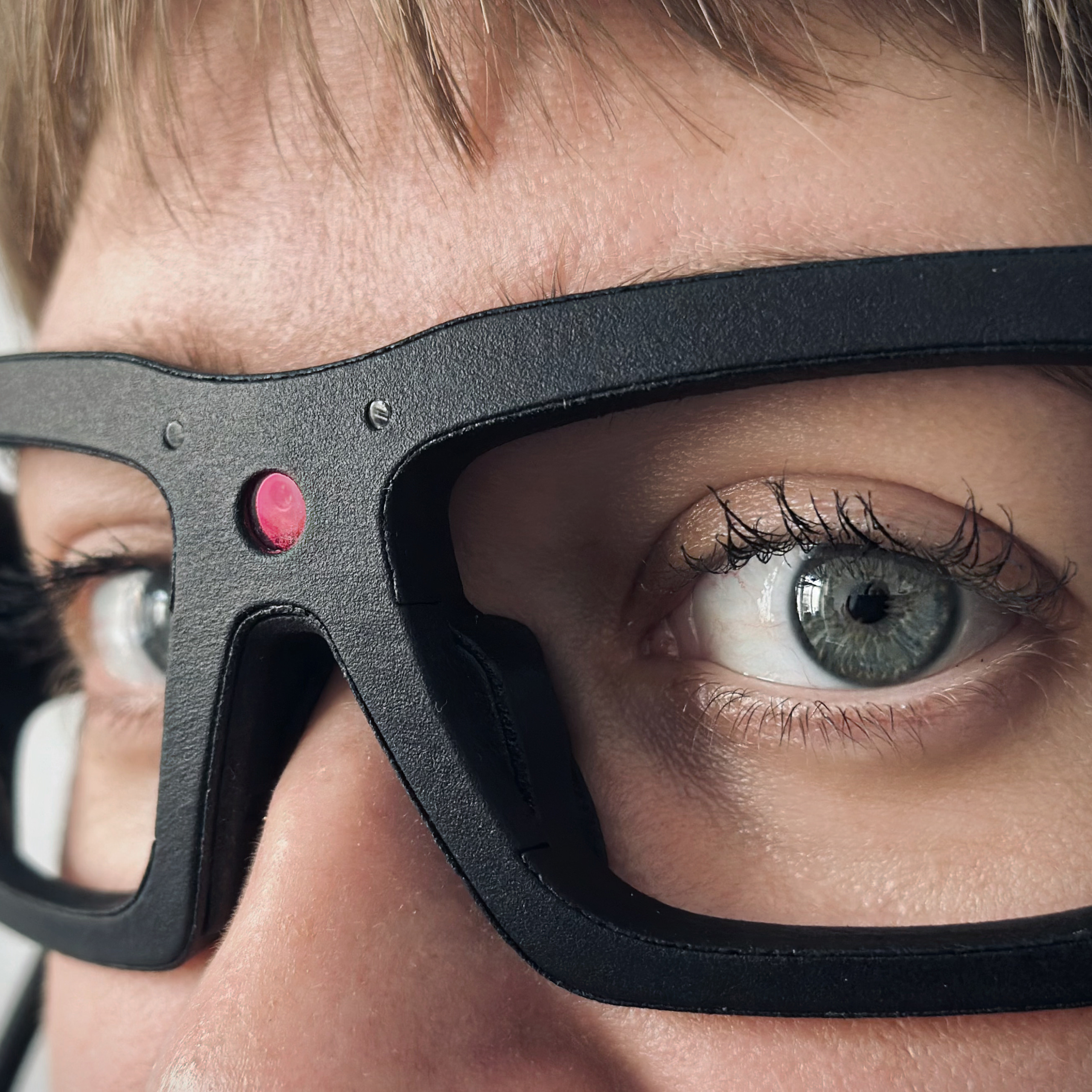
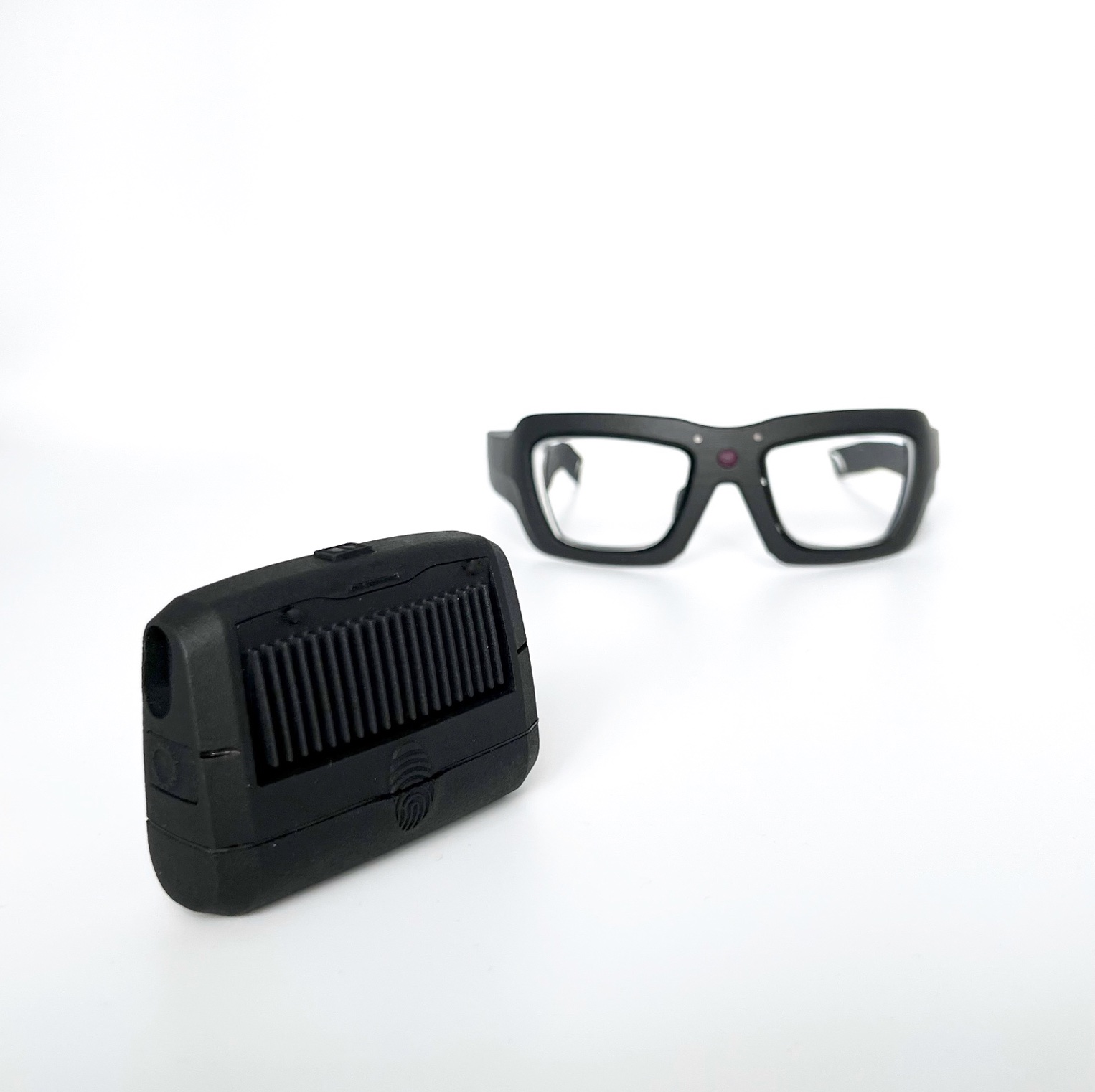
Eye tracking recorded with VPS smart glasses extends OTRS software, providing insight into visual attention rather than just movement. When VPS footage is imported into OTRS10, gaze overlays — including gaze points and heatmaps — appear directly on the video. These overlays allow visual attention to be reviewed alongside the recorded task.
This adds an additional layer of understanding. Experts and novices often scan the same scene differently. For example, a quality inspector on an assembly line may check critical points in a consistent visual sequence, while a trainee may fixate on less relevant areas. Both may complete the task and pass quality checks, but only the expert performs it reliably at the expected standard.
By showing where attention is directed, for how long, and in what order, the combination of VPS smart glasses and OTRS software allows teams to identify differences in execution that standard video alone may miss.
Integration is straightforward. VPS recordings with gaze overlays can be reviewed side by side in OTRS software, allowing teams to compare expert and trainee workflows or analyse improvements between process versions. And all video is stored locally, ensuring sensitive footage remains in-house.
In safety-critical environments, regulators increasingly require demonstrable evidence of competency, not just proof of training completion. Eye-tracking analysis provides a visible, repeatable record showing how attention aligns with procedure.
What Does OTRS Software Do That a Shared Drive of Videos Does Not?
Instead of treating recordings as simple reference material, OTRS software allows teams to analyze how exactly work is performed.
It enables side-by-side comparison of multiple recordings, so users can compare how an experienced operator performs a task with a trainee or evaluates a current process against a proposed improvement. Differences in timing, sequencing, and movement become clearly visible.
When recordings made with eye tracking glasses are used, the comparison can go a step further. Alongside the operator’s movements, teams can see where visual attention is directed during the task. For example, an experienced quality inspector may scan critical checkpoints in a consistent sequence, while a trainee’s gaze lingers on less relevant areas. Comparing these recordings side by side makes differences in both action and attention immediately visible.
Work sequences can also be reordered to simulate process changes before implementing them on the shop floor. The analysis can then feed directly into standardized work instructions, visual training manuals, and multilingual process documentation.
The recording itself is only the starting point. The value comes from the structured methodology applied to it.
From Recording to Results — The OTRS Workflow
What does it look like to go from raw footage to a better process?
In practice, the workflow is straightforward. OTRS software follows the natural sequence of observing work, analysing it, and translating those insights into improvements that can be implemented on the shop floor.
Step 1: Record.
The starting point is capturing real work as it happens. This can be done with a fixed camera, a smartphone using Mobile OTRS, or VPS eye tracking glasses, which show exactly where an operator’s attention is focused during a task.
Step 2: Segment.
Once recorded, the task is broken down into individual work elements inside the OTRS software. Actions such as positioning a component, fastening, inspection, or tool changes are separated into distinct segments, creating a clear structure for analysis.
Step 3: Analyse.
Each segment can then be timed and reviewed. Users can identify where time accumulates, where waste appears, and how different operators perform the same task. Recordings can also be compared against benchmarks or previous process versions.
Step 4: Simulate.
Work elements can be reordered visually to test alternative workflows before changing the physical process. This allows teams to explore improvement ideas safely, without interrupting production.
Step 5: Document.
The final step is translating the analysis into standardized work instructions, visual manuals, or training materials generated directly from the recorded workflow.
For lean practitioners, the benefit is clear: improvements can be tested on video first, reducing both the cost of experimentation and resistance to change.
Where It’s Used
OTRS is most effective in structured, repeatable tasks where small differences in execution can have a significant impact on quality or efficiency. Its core applications are in automotive production, component assembly, and precision manufacturing, with around ten currently active OTRS+VPS deployments, primarily among Japanese automotive manufacturers.
Beyond manufacturing, OTRS is applied in aviation maintenance and inspection, and industrial training programs, wherever structured workflows and standardisation are critical. It also supports service and logistics contexts where consistent task execution is essential.
The platform’s multilingual interface — supporting Japanese, English, Chinese, and possibility for other languages — enables international teams to adopt a single methodology across sites. Its adoption by world-leading brands such as TSE Prime-listed leading Japanese automakers and companies in the electronics and precision components sector demonstrates its role in supporting lean manufacturing and kaizen programs while maintaining consistency across global operations.
Data Protection and Use in the European Context
For companies in Europe, a clear distinction between process analysis and individual performance monitoring is essential to ensure that video-based work analysis can be used in a compliant and accepted way. Accordingly, such software should be designed to analyse and optimise workflows, not to enable surveillance or control.
Recordings should remain within the organisation and be used in line with existing data protection policies, as well as in coordination with established compliance structures. When applied appropriately, these solutions create transparency at the process level while protecting employee data.

Reading tip: Working safely with Smart Glasses
Learn from data protection expert Renate Stiegler how companies can deploy smart glasses in compliance with GDPR – from data encryption and ergonomics to successful workplace implementation.
Looking Beyond the Process
Standard video analysis already helps teams understand how tasks are performed and where time, movement, or sequencing differences appear. But in complex industrial environments, performance differences are not only about what operators do, but also about how they perceive the task while doing it.
This is where eye tracking can add another layer to process optimisation. By revealing where experienced operators focus their attention during a task, organisations can better understand how expertise develops — and how that expertise can be transferred through training and standardised work.
When combined with structured video analysis, attention data can help teams refine procedures, improve training programmes, and detect potential errors before they affect quality or safety.
In combination with structured video analysis, attention data can help teams refine procedures, improve training programs, and detect potential errors before they affect quality or safety. Our article “Seeing What Others Are Missing” explores how eye tracking reveals performance differences that standard observation methods overlook.

GOT YOUR ATTENTION?
See how eye tracking can unlock the hidden patterns in your processes—and turn expertise into your competitive advantage.