Technicians diagnose problems by noticing subtle deviations. Quality inspectors detect defects that automated systems may not yet recognise. Operators monitor complex environments in which dozens–sometimes hundreds– of signals compete for attention.
For decades, this human element has been treated as an unavoidable uncertainty. Clearly important, yet notoriously difficult to analyse systematically.
Human Performance Improvement (HPI) is changing that.
The Layer That Human Performance Analytics Has Always Skipped
Traditional operational data answers the what: when did a failure occur, which process parameter exceeded tolerance, how often does a specific error happen. This is valuable. But it rarely answers the why.
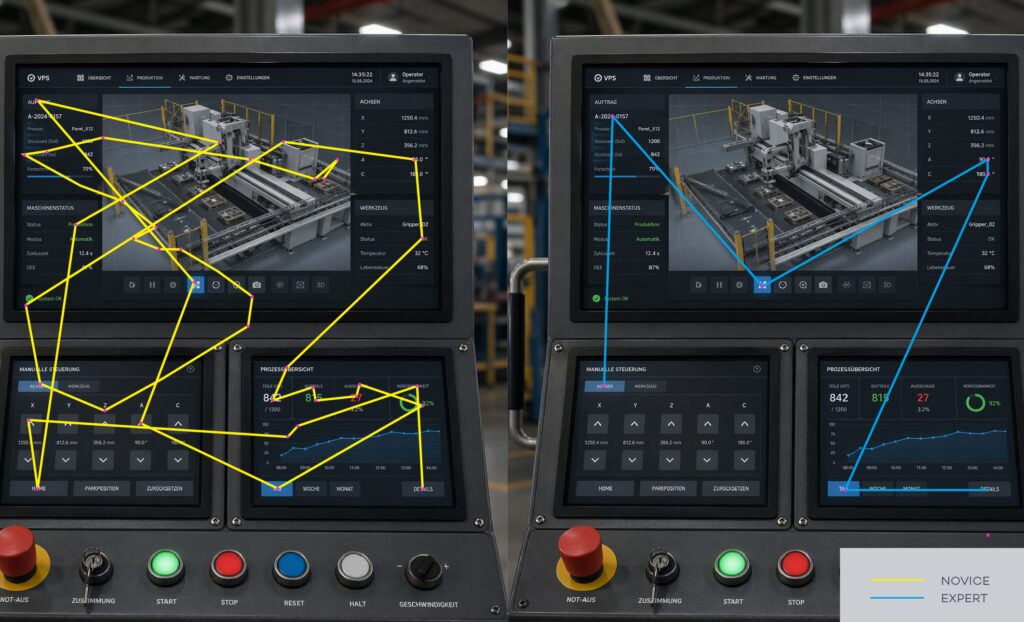
The missing variable is human attention. In complex industrial environments, performance depends heavily on what operators, technicians and inspectors actually perceive in the moment – which signals they notice, which they prioritise, and which they overlook entirely. This dimension has never appeared in an operational dashboard – not because it is unimportant, but because it was previously impossible to measure.
A new, perception-driven way of Human Performance Improvement addresses exactly this gap. By using technologies such as eye tracking smart glasses to capture gaze behaviour during real operational tasks, organisations can observe how people actually perceive complex environments. The central insight this reveals is one that has long remained implicit: Most industrial incidents are not caused by missing knowledge. They are caused by missed cues.
Why this matters now
Two forces are converging to make HPI increasingly urgent.
The first is complexity. As industrial systems become more connected and data-rich, the cognitive demands placed on human operators grow in parallel. More signals, more interfaces, more decisions per shift – and a wider gap between what is visible and what is actually perceived.
The second is demographic change. Experienced workers are retiring faster than organisations can replace them. The perceptual expertise they carry – built over years of pattern recognition in real environments – disappears unless there is a systematic way to capture it.
HPI provides that system. By making attention measurable, organisations can translate implicit expertise into structured knowledge, identify where perception consistently deviates from critical requirements, and build training that reflects how experts actually see – not just what they know.

A New Dimension of Industrial Performance
The most advanced industrial organisations are already combining machine data with human performance data to get a more complete picture of operations. Not to monitor individuals, but to understand how work is actually performed – and to use that understanding to reduce errors, improve training and build more resilient teams.
What was once the invisible layer of industrial performance is becoming measurable, manageable and actionable.
Key Benefits of Human Performance Improvement
- Up to 50% faster training and onboarding
- Up to 44% fewer operational errors
- Scalable expert knowledge transfer across locations
- Improved attention analysis in the workplace
- Increased safety awareness in complex environments
- Reduced downtime through faster issue resolution

READY TO GO DEEPER?
See how eye tracking can unlock the hidden patterns in your processes—and turn expertise into your competitive advantage. Our Human Performance Improvement whitepaper shows you exactly how.
Where Human Performance Improvement Creates Measurable Impact
The gap between available information and what people actually perceive shows up differently across industrial environments – but the underlying dynamic is the same. Here is where organisations are already closing it.
Training & Workforce Development
Experienced workers know where to look – but that perceptual knowledge is nearly impossible to transfer with manuals or job shadowing alone. Eye tracking makes expert attention patterns visible and scalable. Organisations applying this approach have reduced onboarding time by up to 50%.
Quality Assurance
Inspection errors rarely happen because people don’t know the standard. They happen because attention drifts at the wrong moment. By analysing where inspectors actually focus, organisations have reduced rework rates by up to 40%.
Remote Support
When a machine fails, the cost is not just downtime – it’s the time it takes to get the right expertise on site. Eye tracking smart glasses allow remote experts to see exactly what on-site personnel see in real time, enabling precise guidance without travel. Savings of up to $40,000 per repair case have been documented.
Safety & Risk Management
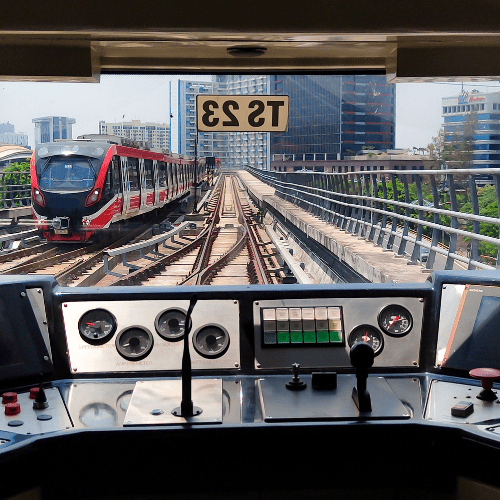
In safety-critical environments, a single overlooked signal can trigger a serious incident. Eye tracking-based attention analysis identifies where perception consistently deviates from safety-critical requirements – before incidents occur, not after. One rail infrastructure operator reduced critical signal overruns by 44%.
Process Optimization
Many operational inefficiencies never appear in standard KPIs. They live in how people interact with processes – time lost searching for materials, navigating complex interfaces, managing cognitive overload. Eye tracking reveals these hidden patterns and enables targeted redesign. Organisations applying this approach have achieved a 20% increase in output.

Got your attention?
See how eye tracking can unlock the hidden patterns in your processes—and turn expertise into your competitive advantage.