This is not a failure of experience or individual capability. Rather, it is a structural challenge that emerges when complex systems and scenarios outpace human perceptual capacity under pressure. In training and exercises, this gap becomes visible: procedures are followed correctly and environments are scanned, yet critical information is not registered at decisive moments. Traditional training methods can observe outcomes — movements, reactions, decisions — but they struggle to explain why perception and decision-making break down under high cognitive load.
The challenge: Human perception under pressure
As defense forces invest heavily in advanced systems and simulations, humans remain the central and most critical element of operational effectiveness. Yet human performance – attention, perception, and decision-making under stress – often remains insufficiently understood and only partially addressed in training. Closing this gap does not mean reducing the role of humans: it means understanding and supporting it better.

Eye tracking: Making human perception visible
If attention and perception shape performance under pressure, the challenge is to observe them in real time during training. Eye tracking offers a different perspective by revealing where attention is actually directed – moment by moment and under realistic conditions. Rather than relying solely on external observation, it captures visual behavior in real time and connects it to actions and decisions.
Used in live exercises and simulations, eye tracking reveals which information is perceived and which is overlooked. This makes it possible to distinguish between procedural errors, tactical decisions, and perceptual limitations – turning perception itself into a measurable dimension of training and system analysis.
What this means for training units and forces
For training units, making attention and perception visible changes how exercises are evaluated, adapted, and improved. Instead of assessing performance solely through observable actions and outcomes, training can focus on how situations are actually perceived under pressure.
In practice, this enables:
- More precise feedback: Instructors can distinguish between procedural errors and perceptual limitations, leading to clearer, more targeted debriefings.
- Earlier identification of blind spots: Attention gaps and perceptual overload become visible before they translate into repeated mistakes or unsafe behavior.
- Shorter and more effective learning curves: Training can be adapted to individual and team-specific attention patterns, reducing trial-and-error learning.
- Improved situational awareness under stress: Trainees learn to manage attention more deliberately in complex, high-pressure environments.
- Training scenarios that better reflect operational reality: Exercises can be refined based on how personnel actually interact with environments, interfaces, and teammates.
From research to real-world defense training
For a long time, eye tracking was used primarily in research settings under controlled conditions, which limited its relevance for realistic defense training. Turning perceptual analysis into a practical training tool required technology that could operate reliably in live exercises and simulations — without disrupting movement, communication, or established procedures.
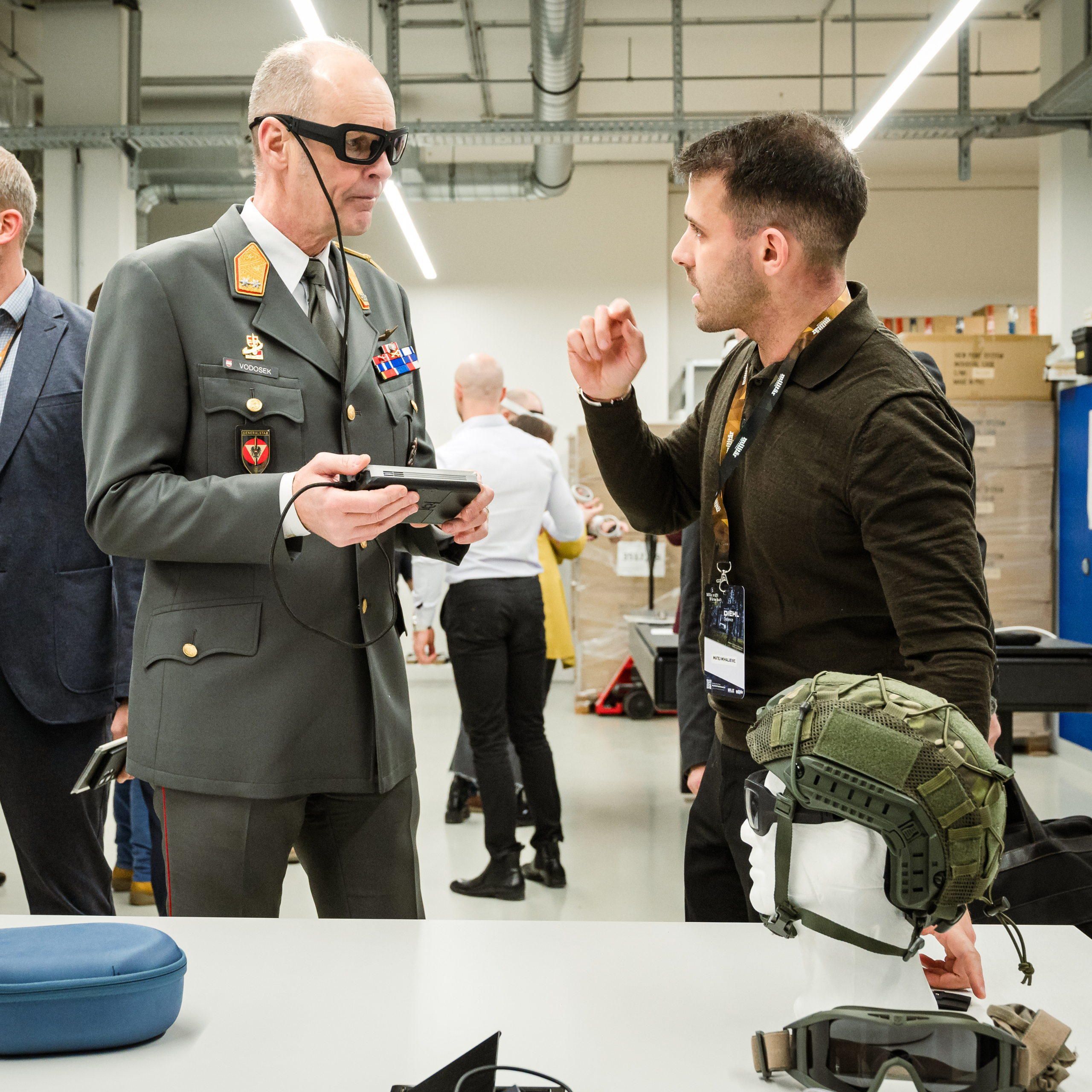
This transition has been enabled by embedding eye tracking into lightweight, wearable smart glasses. Viewpointsystem has focused on translating research-grade eye tracking into systems suitable for real-world defense environments. Used directly within training scenarios, these glasses allow perception data to be captured where decisions are actually made — under realistic stress and operational conditions.
Today, VPS Smart Glasses are used by armed forces, including the Austrian Armed Forces and the Canadian military, as well as other NATO member forces. They support the analysis of attention and situational awareness in live and simulated training environments, helping training units align exercises more closely with the realities of modern operations.
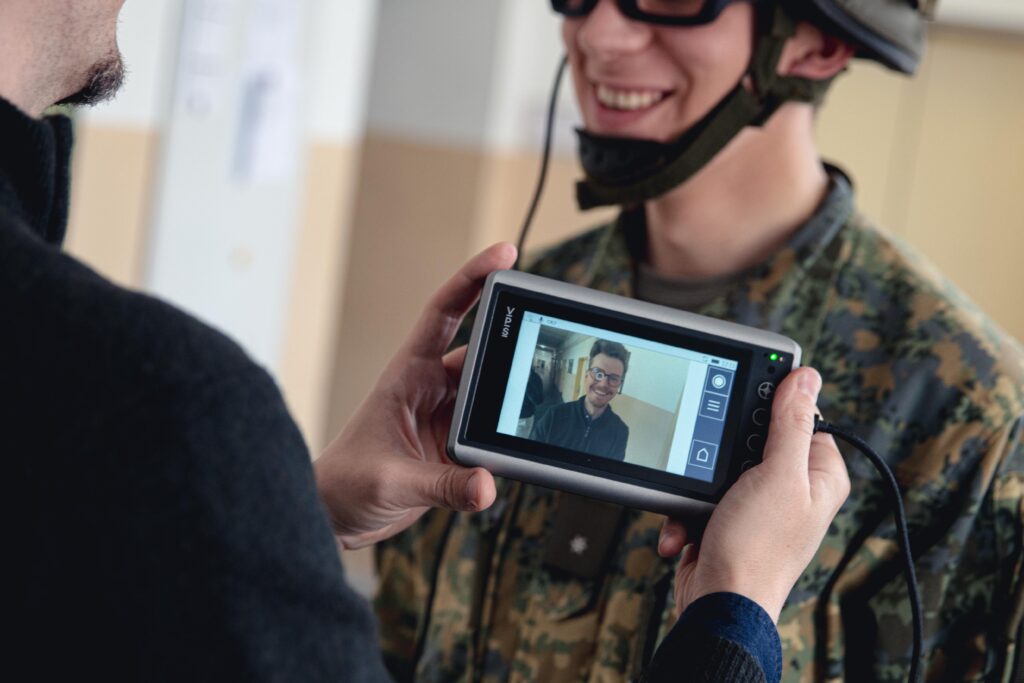
Recommended Read: See What Overwhelms Your Users
Two recent studies show how eye tracking uncovers concrete UX issues in flight simulators and military communication systems — and what design changes follow from the findings.
What this means for builders and integrators
Beyond operators and training units, eye tracking is also relevant for those who design and build defense systems. When implemented as a modular, integration-ready capability, it can be embedded into simulators, wearables, and mission-critical interfaces. The eye tracking technology “Digital Iris” is designed to integrate into existing system architectures in multiple configurations, allowing system designers to adapt it to technical constraints and development roadmaps.
In practice, this enables builders and integrators to:
- Embed eye tracking into simulators, wearables, and mission-critical systems to analyze user behaviour directly within operational and training environments.
- Analyze human interaction with complex interfaces by identifying where attention is directed, delayed, or lost under cognitive load.
- Optimize UX, ergonomics, and system clarity based on objective gaze data rather than assumptions or post-exercise feedback alone.
- Build on proven, validated technology as demonstrated in defense training contexts and in the EDF-funded ABITS project, where eye tracking was combined with additional biometric sensors to assess attention, stress, and cognitive load in integrated multi-sensor systems.
Looking ahead: From technology to training reality
As defense environments continue to increase in complexity, the question is often no longer whether technology is advanced enough, but whether training and systems are aligned with human perception under pressure. Making attention visible is a first step. Using this insight to shape training, simulations, and system design is where real progress happens.
For training units, this means moving beyond outcome-based assessment toward a deeper understanding of how situations are perceived and decisions are formed. For system designers, it means grounding interfaces and interactions in observable human behavior rather than assumptions. In both cases, the goal is the same: to better prepare people and systems for the realities they will face.
These questions — how humans perceive, decide, and act under stress — are becoming central to modern defense training and technology development. Addressing them requires collaboration across training, research, and system design. It is a conversation that is already underway — and one that will continue to shape how operational readiness is built in the years ahead.
To explore how eye tracking can be applied in defense training and system design, visit us at Enforce Tac 2026 at the booth of our partner ATG Kriminaltechnik in hall 7, booth 560.
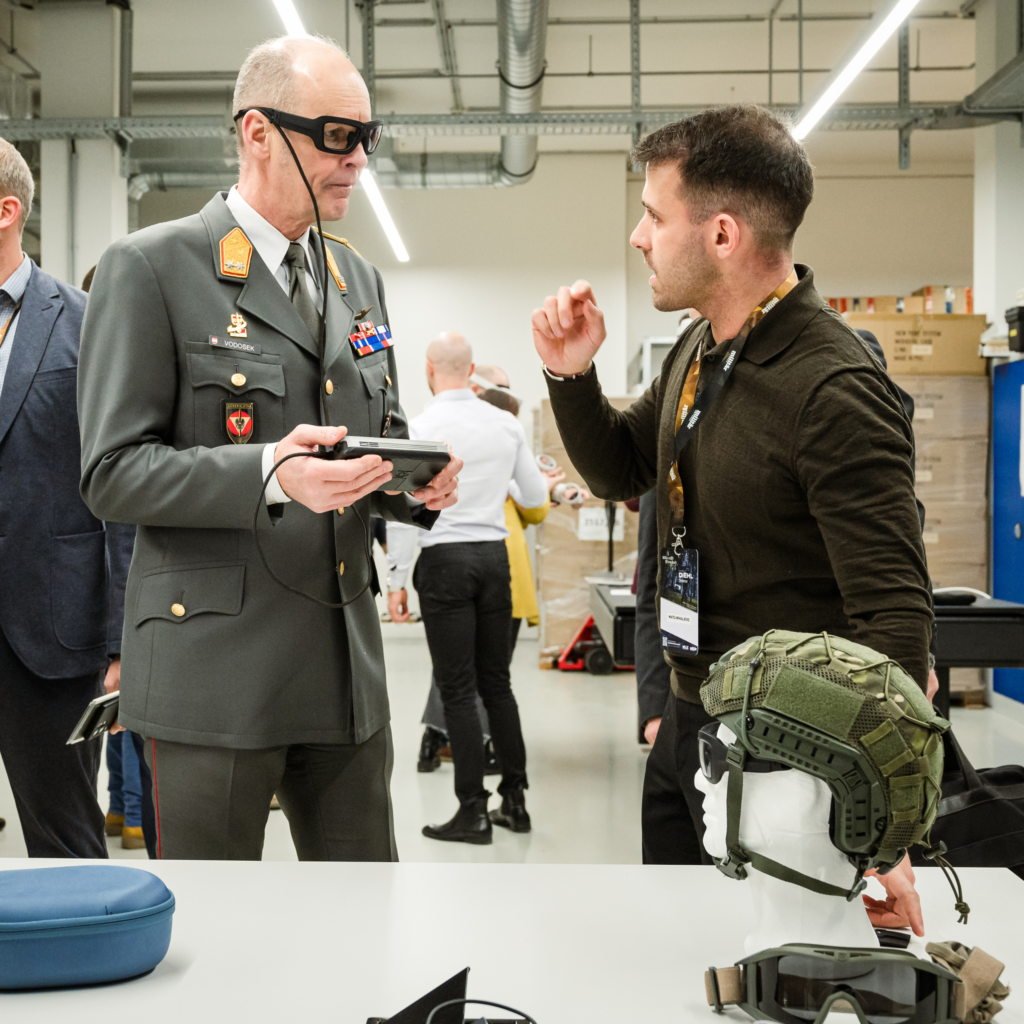
Recommended Read: Innovation in Defense — Eyes on What’s Next
At “Militia meets Business,” leaders from the military and industry explored how startups, eye tracking, and emerging technologies can help shape the future of defense.
Read More